
2026 Fall Conference
Haystack Workshops
Maggie Muth (she/they): Narrative Embroidery: paying attention to playfulness (Fibers - Haystack)
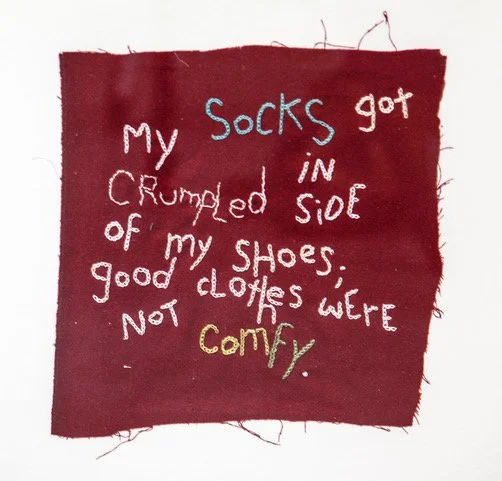
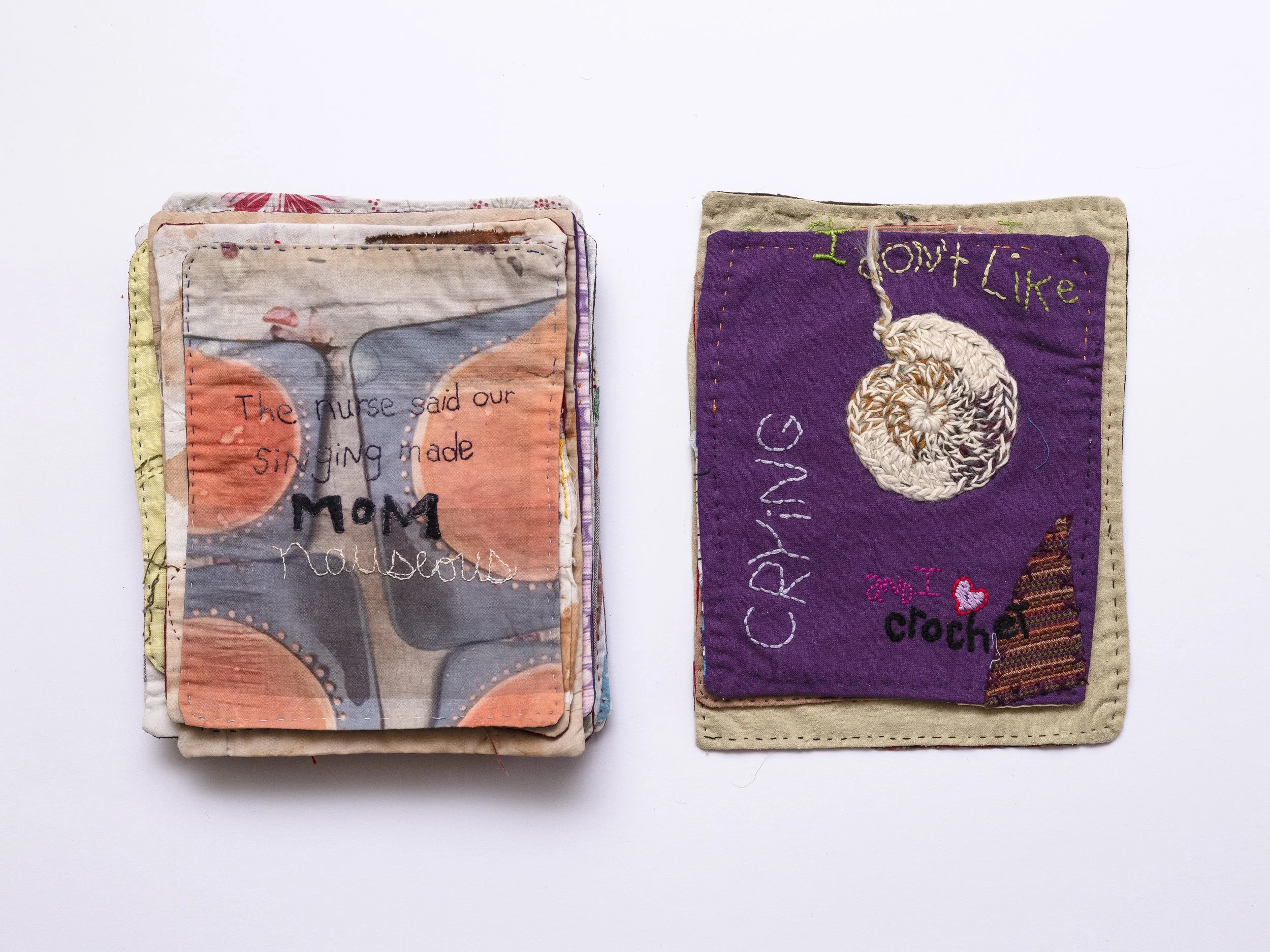
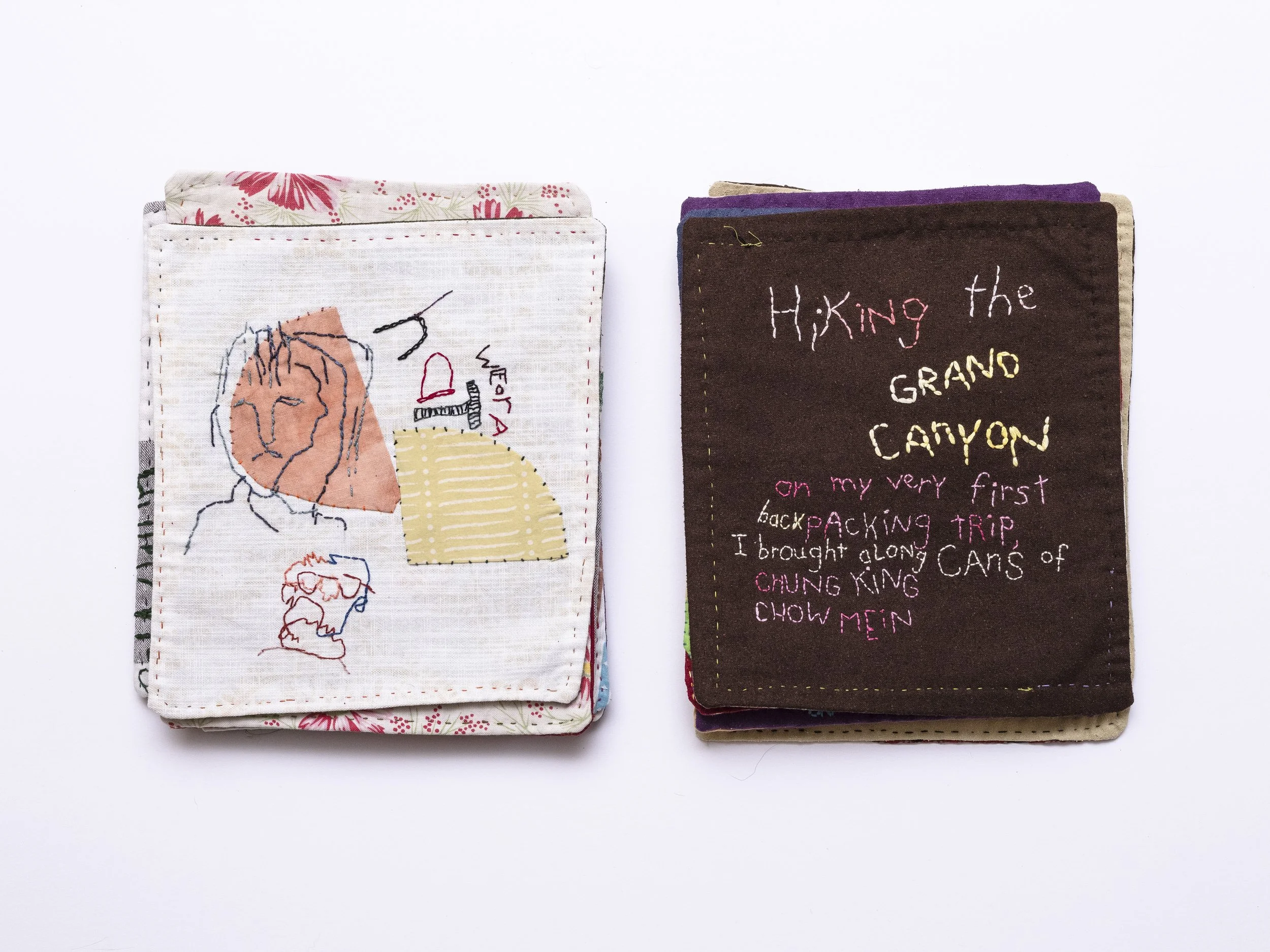
This workshop will focus on observation and simple stitching. Using basic stitch techniques, and everyday materials to record a story/narrative (or two), we will learn basic embroidery stitches or practice new ways of incorporating stitches you might already know. You will come away from the class with at least one narrative embroidery sample and the beginnings of a cloth book.
What is narrative embroidery? Observe your beautiful daily life for fun and interesting tidbits: text messages, refrig notes, grocery lists, post-its, doodles, inside jokes, wishes, resentments, secret ideas and then free form stitch them as forever treasure. We will take quiet observation time and sharing to focus on paying attention to the everyday sweetness in our lives, and how we talk about the world around us, which will help to develop the narratives we will stitch.
Keri Smith: “At any given moment, no matter where you are, there are hundreds of things around you that are interesting and worth documenting.”
Inspiration will come from the narrative works of artists such as Tilleke Schwarz, Iviva Olenick, Maira Kalman, and Louise Bourgeois as well as ‘outsider artists’ Bispo Do Rosario, Lorina Bulwer, Aminah Brenda Robinson, Rosie Lee Tompkins.
Materials
Facilitator will supply
6”embroidery hoop
Lightweight cotton fabrics - 2-3 solid colors
A package of embroidery needles
DMC embroidery floss - 2 colors
Materials to bring
Supplies you will need to bring:
A pair of sharp snips and a pair of regular scissors
A sketch or notebook and a writing implement
A pencil (not mechanical)
One sheet of very fine grit sandpaper
A roll of painters tape
Suggested things to bring for sharing or adding to the mix of play:
Approximately ten 12” squares of lightweight mostly solid color woven fabric (cotton, but not denim) - any colors or all the same color. Material that has had another life is best: old pj’s, thrift store shirt, tee towels, etc. The more large-ish scraps, the better!
Additional embroidery floss (DMC) or Perle cotton size 8, any kind of sewing or embroidery thread, sock yarn, etc. Any color (s)
Any other hand sewing supplies you’d like to have on hand and/or share with others
Biography
For most of my life I have been a maker - primarily with a needle and thread. I studied at the Opus School of Textile Arts in London, where I focused my work on Narrative Embroidery. And later, I earned a BFA at Maine College of Art and Design, where I focused on drawing, painting and printmaking. Narrative embroidery is, for me, the best way to combine drawing and stitching. In one of my lives, I was an ASL interpreter, which has many subtle effects on my love of storytelling and the ways in which language is expressed. My most favorite (paid) job was as the Education Coordinator at the American Visionary Art Museum, in Baltimore, where I developed and taught programs focusing on the spontaneity and innovation of untrained (outsider) artists. I have taught classes online, locally, and overseas.
You can see my work on Instagram @maggiemuth
See me speaking about my fave topic:
Heidi Parkes YouTube www.youtube.com/watch?v=WeHwcuGyxR4
Lucky Platt (she/her): Storytelling with Crankies (Visiting Artist - Haystack)
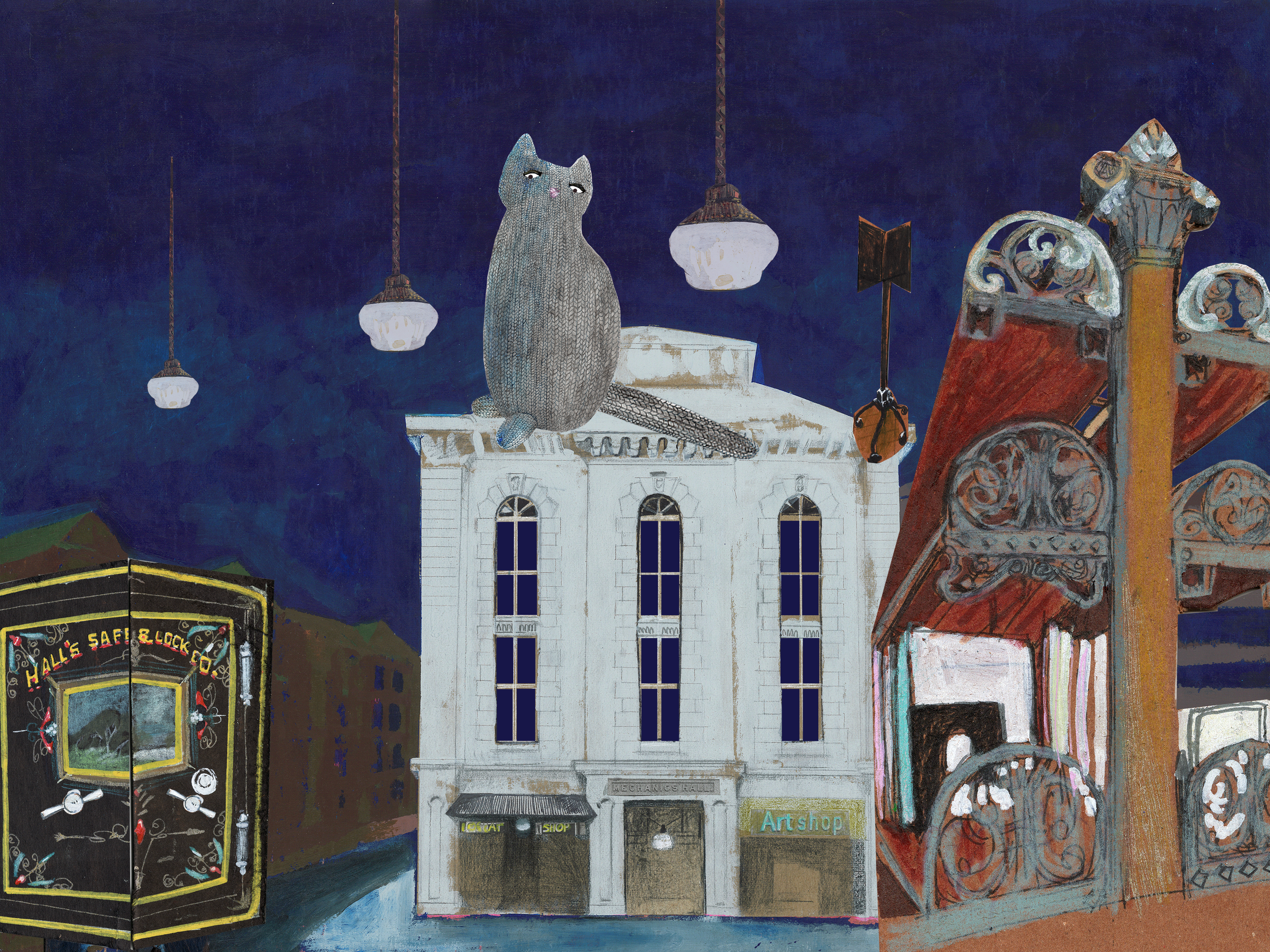
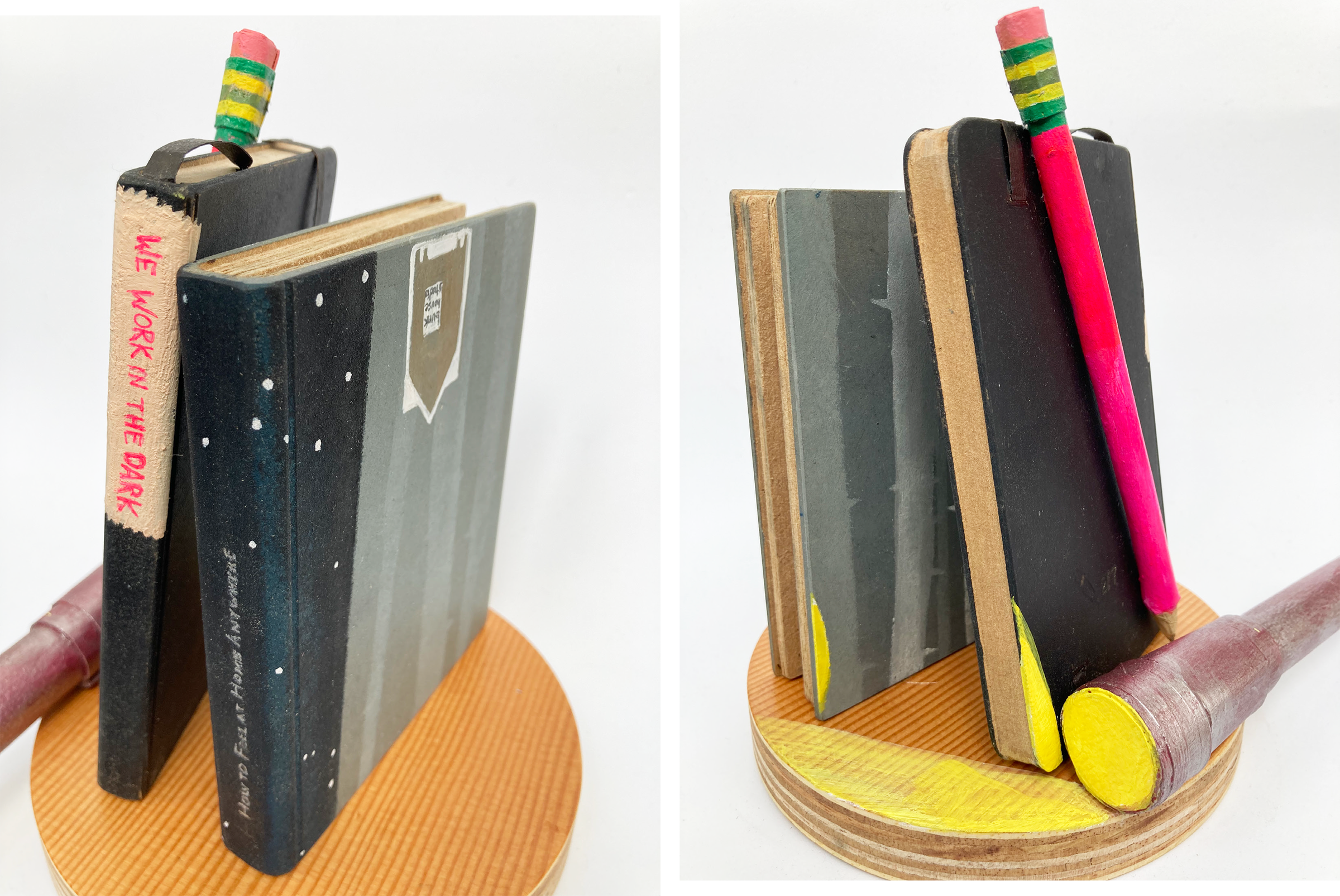
In this immersive mixed media workshop, we’ll reveal and expand the visual narrative and performance possibilities of the time-based art form known as the crankie. Crankies, aka moving panoramas, are a very old storytelling form involving an illustrated or decorated scroll wound around two spools and hand-cranked, often inside a diorama or other miniature stage-like setting. In the history of cinema, crankies inspired the earliest ‘moving pictures’, and were sometimes as big as an entire theatre stage! We’ll begin with storyboarding rough sketches for each 'frame' or segment of the visual narrative, and then transfer the sketch/idea to a paper or fabric scroll. Participants will have the option of creating in a range of mediums, collaging or repurposing existing artwork, adding text, embellishing the crankie box, and adding analog effects and sound to the presentation of their crankie. Come with a story in mind, or an idea in search of a visual narrative!
Materials
Facilitator will supply
Crankie boxes
Assorted paper and fabric
Markmaking tools
Glue
Tape
Sewing and Embroidery Tools
Materials to bring
Favorite Mark-making tools (pencils, pens, paint, embroidery thread, stamps/ink)
Favorite Paper or Fiber
Collaging materials that can roll around a spool (photographs, prints and/or artwork to repurpose)
Biography
Lucky Platt (she/her) is a visual artist and children's book creator based in Burnham, ME. She loves narrative and time-based art forms, and works in a range of mediums, including oil paint, paper sculpture, ballpoint pen, markers, colored pencil and printmaking. Platt is a co-founder of the Crankie Matinee, an annual festival of crankie art during the Belfast Poetry Festival. Her debut children's picture book was a 2022 Maine Literary Awards Finalist in Children’s, a 2022 Ezra Jack Keats Award Finalist in New Writers, a 2021 New England Book Award Finalist, and has been translated into Korean. She has presented art and writing workshops for children and adults throughout Maine, most recently with Island Readers & Writers, University of Southern Maine Book Arts Program, Farnsworth Art Museum, and Colby College/Green Block Studios. Platt often collaborates as Bunkhouse Studio with her husband, wood artist Jim Macdonald.
Kiran Chapman (he/they): SHUCK IT! (Blacksmithing - Haystack)
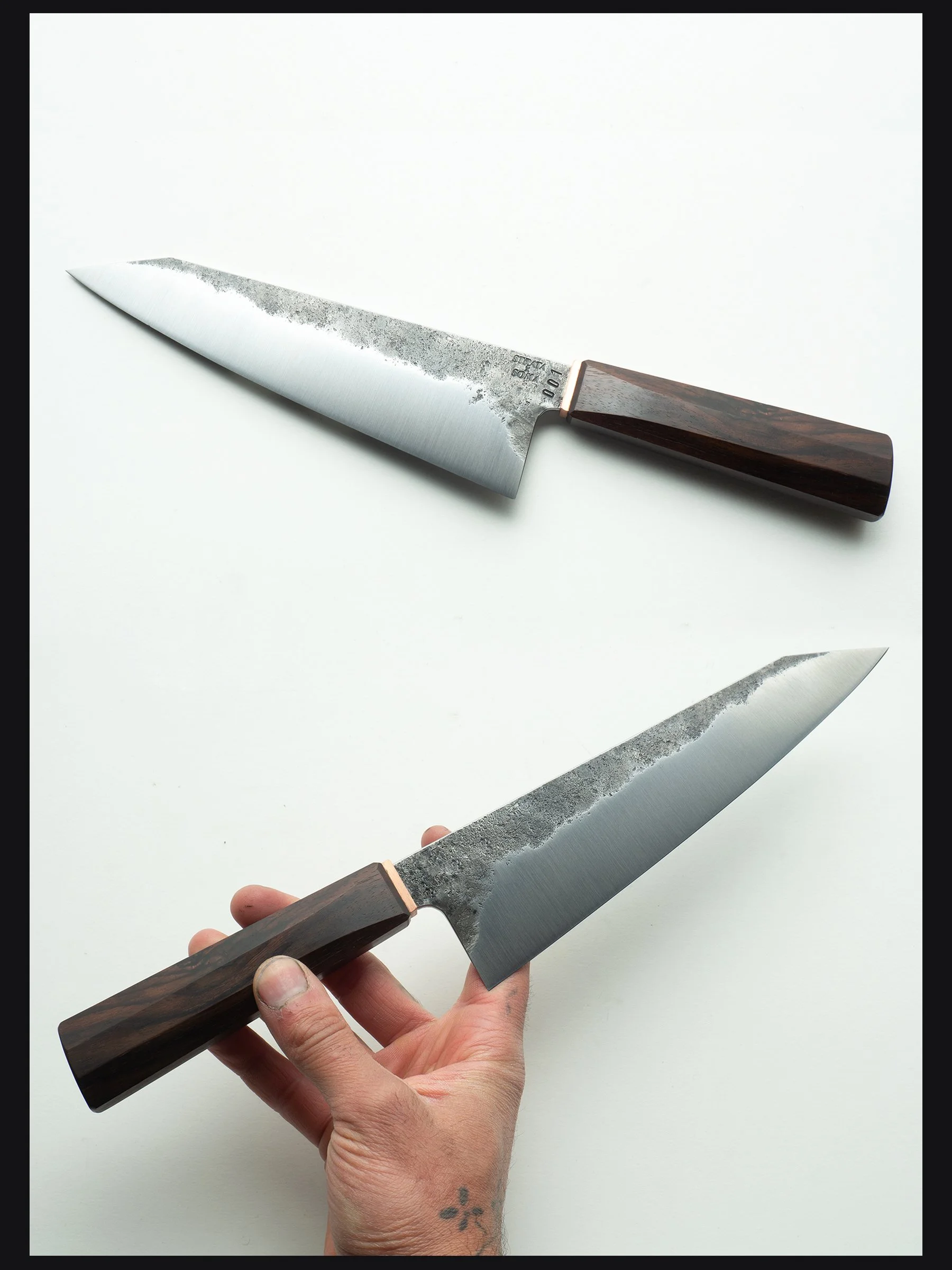
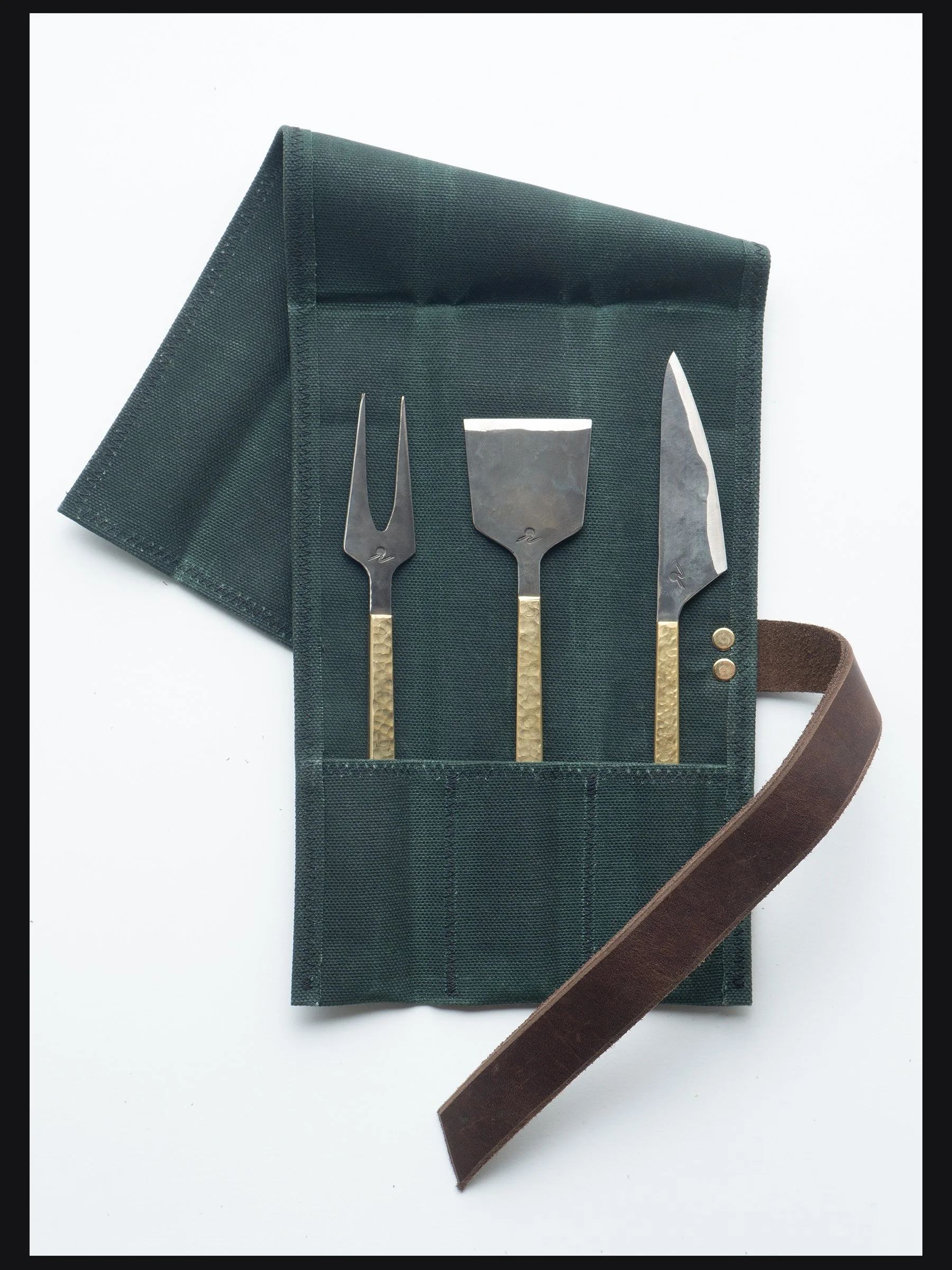
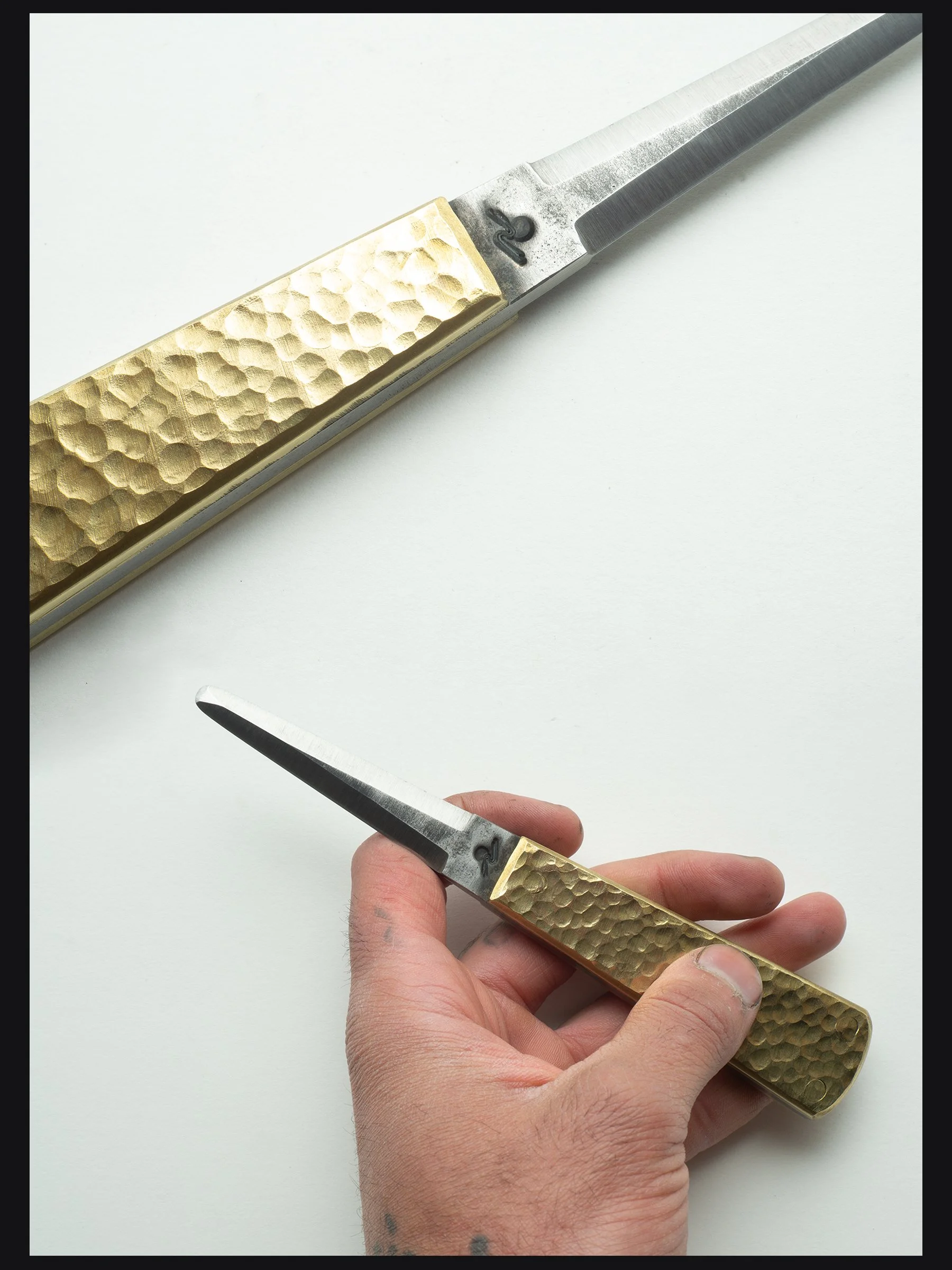
In this class, students will forge high-carbon stainless steel oyster knives—an apt tool for our time on the Maine coast. We’ll move through the full process: shaping hot steel at the anvil, heat treating for strength, and refining each piece through grinding and handle work.
While each knife will reflect the maker’s hand, the focus of this class is less on design, and more on building a functional tool and gaining a clear understanding of metallurgy and process. We’ll pay attention to proportion, edge geometry, and the small decisions that make a tool feel good to use.
Each student will leave with a finished oyster knife, and of course we’ll put them to use together!
Materials
Facilitator will supply
AEB-L Stainless Steel Bars
Handle Paracord
Grinding Belts
Materials to bring
Clothing with natural fibers to wear while blacksmithing
Biography
Kiran Chapman (he/they) is a blacksmith and designer based in Southern Maine, and the founder of Soma Metalwork. He makes kitchen tools and functional objects that blend traditional forging with a clean, modern feel.
Kiran studied urban planning and studio art at Vassar College, before working for an architecture firm in NYC. They began working with their hands through wooden boatbuilding after moving to Maine in 2018, and found blacksmithing soon after. Since then, they’ve apprenticed at a third-generation forge, trained with smiths in the US and Japan, taught metalworking in their own studio and at various craft schools, and now manage the sharpening department at Strata, a specialty knife shop in Portland.
Olivia Boi (she/her): Maine Found Object Jewelry Class (Fine Metals - Haystack)
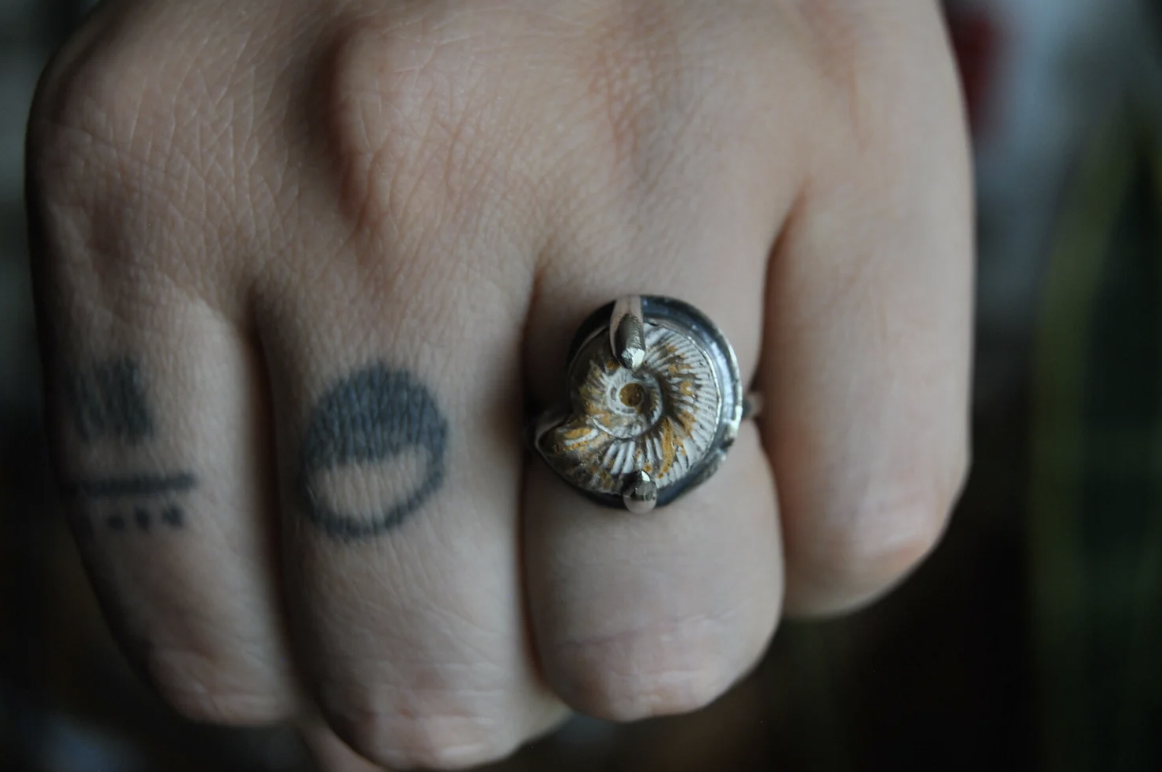
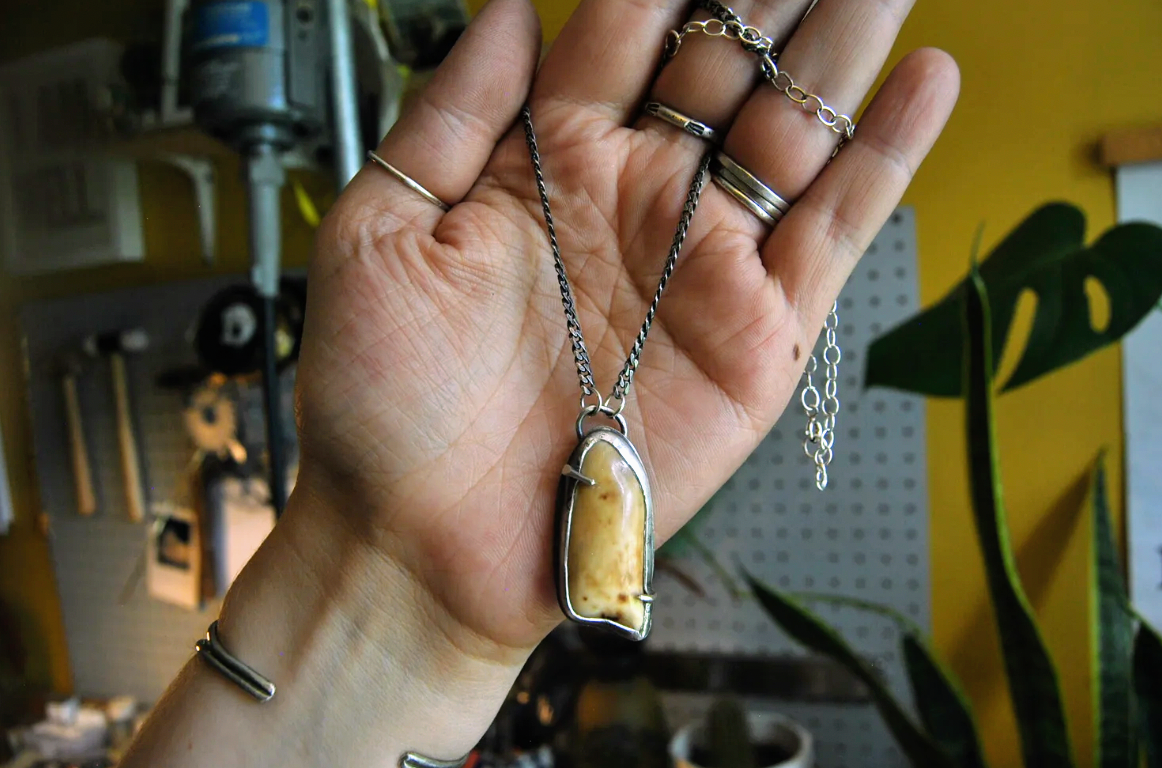
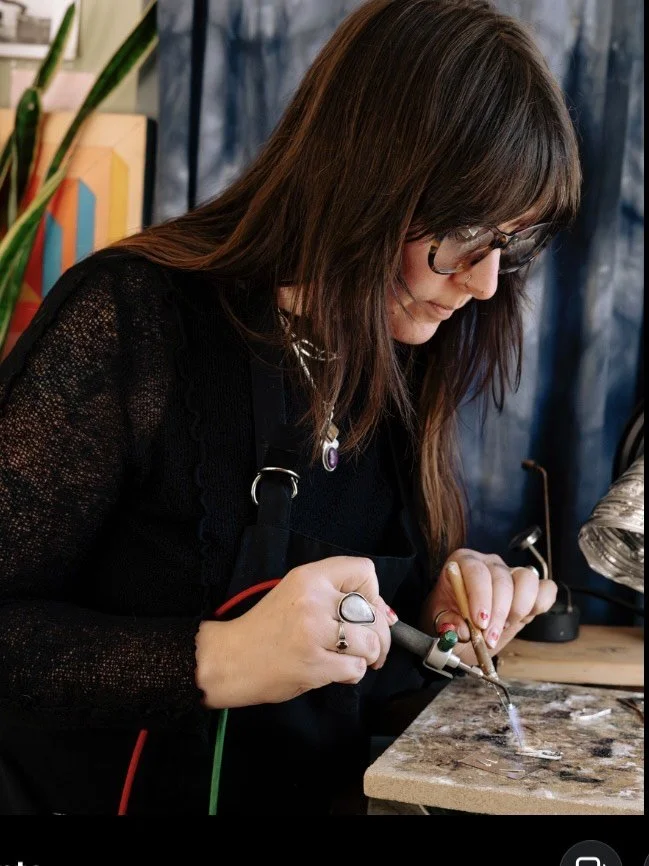
Bring your own favorite Maine Found Objects to Haystack and set them in jewelry to be worn, adorned and to have forever encased in metal! Found objects can be lots of things EX: Ceramic bits, Coins, Wood, Metal, Glass, Stained Glass, A Photo, Dried Plant Matter, Beach Rock, Stone, Bone, Plastic, Photos- ETC. Please feel free to bring more than one found object. I will also have some found objects I will be bringing with me to offer the class as well... We will be learning experimental sawing techniques, learning to form a bezel around your found object, solder the bezel cup shut and soldering the bezel onto the backplate, layering metals and sweat soldering. We will also be learning to create prong settings to hold your object like a hug. These settings are especially great for those 3-d found objects! Inspired by our environment and surroundings, I thought sawing out images of the trees and ferns we see around us could also be a fun aspect to include in our design.. giving the backside of your pendant as much life as the front is something I always encourage and admire in jewelry.
Materials
Facilitator will supply
brass & copper sheet
brass wire 10 g round for prongs/rivets
brass 12 g wire round for prongs/rivets
10/12 g drill bits for riveting & hole making
brass bezel wire % /maybe sterling silver bezel wire
brass/copper jump rings
brass clasps
brass chain
H,M,E 22 gauge solder
Necessary Materials to bring
Your found objects ! Found objects can be lots of things EX: Ceramic bits,
Coins, Wood, Metal, Glass, Stained Glass, A Photo, Dried Plant Matter, Beach
Rock, Stone, Bone, Plastic, Photos- ETC.
Metal material you want to bring
* we may not be able to solder all metals ( only solder safe metals are: brass, copper, silver, gold ) but we can certainly rivet, drill and attach otherways *.
Websites for purchasing silver or other materials will be provided after registration
Any chains you’d like to use or incorporate into your design.
Biography
Olivia Boi is the owner and creator of Strong Moon Metals. After earning her Bachelor of Fine Arts, she took an introductory smithing class at Metalwerx in Waltham, Massachusetts, sparking a passion that led her to start Strong Moon Metals in December 2017. Working from her home and metals studio in Maine, Olivia creates jewelry inspired by archaic talismans and her Sardinian ancestral roots, using lost wax casting, sterling silver, brass, and beautifully cut stones. In addition to her studio practice, she teaches a six-week intermediate metals course, has mentored sculpture students at Montserrat College of Art, and founded The Rebel Market, which has showcased over 300 Maine artists in the past four years. Her work is sold primarily online and at select shows and shops throughout New England.
Brian Smith (he/him): Connecting to Nature Through Accumulation (Studio - Haystack)
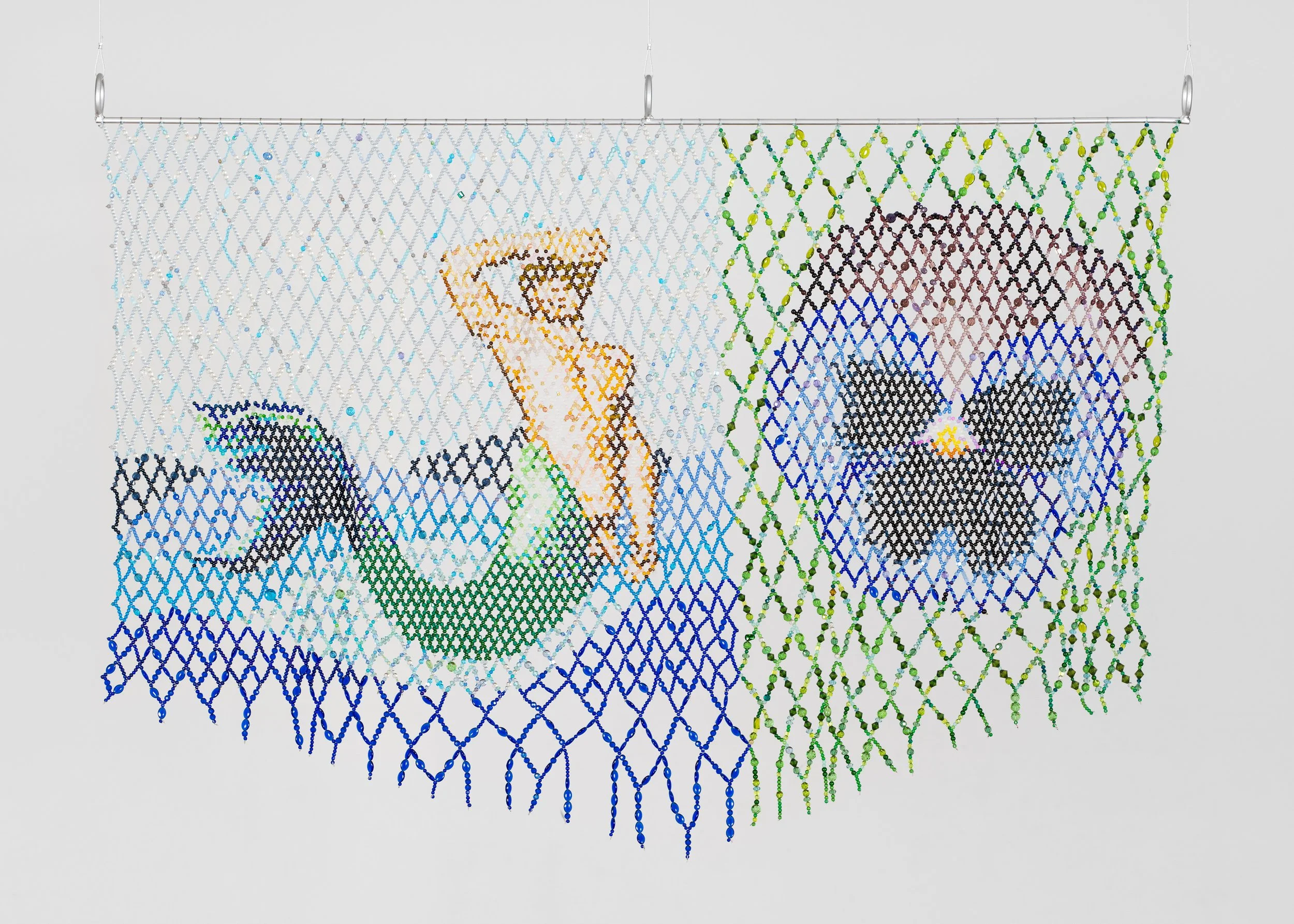
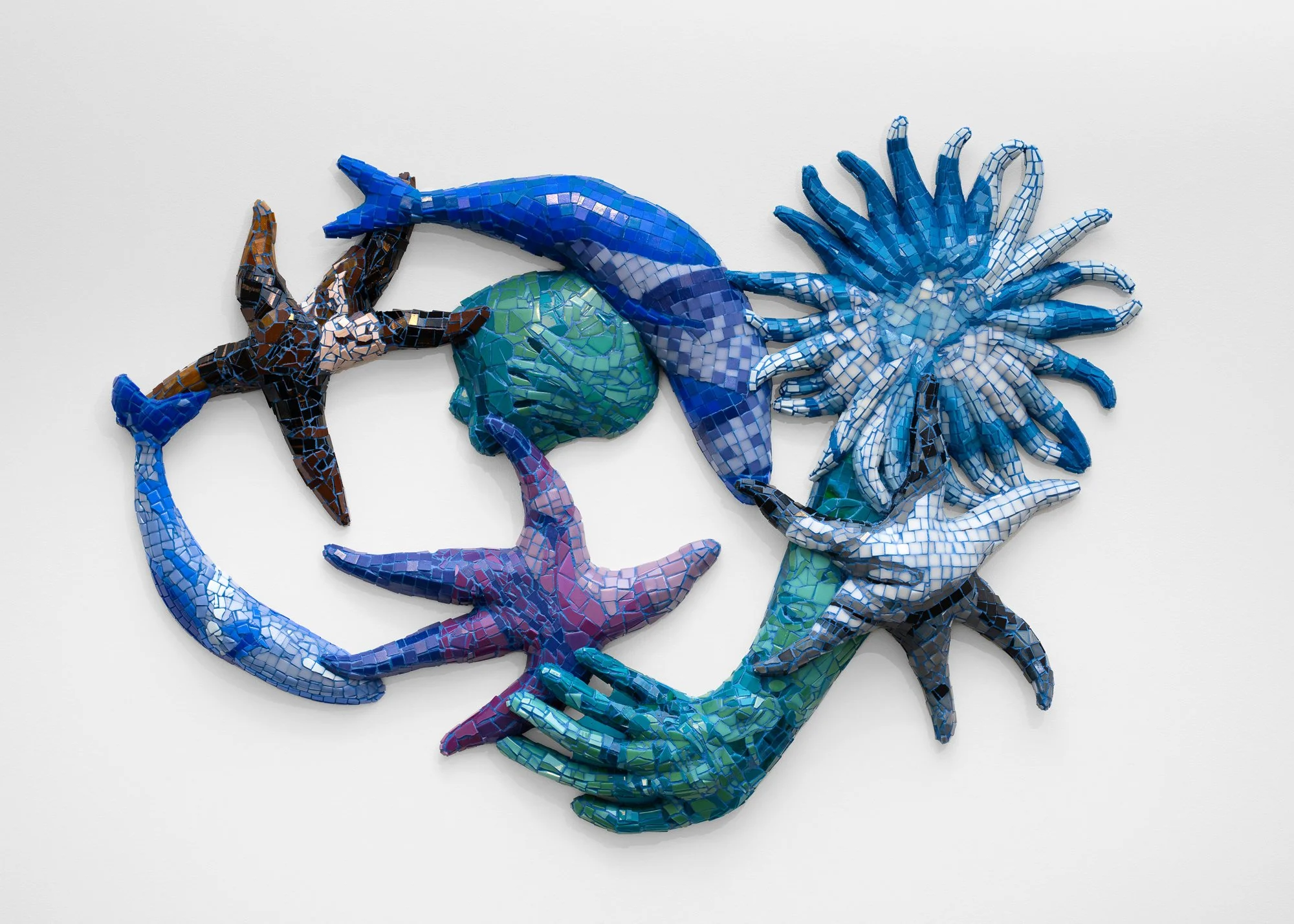
Pillowy moss, jagged rocks, fractal root systems, barnacle-covered pilings—natural environments are defined by dense, irregular texture. Rather than the smooth uniformity associated with manufactured objects, forms “of nature” often register through variation, buildup, and surface complexity. This workshop focuses on using accumulation as a strategy to produce that effect.
On day one, participants will construct a sculpture—either fully in the round or as a relief wall piece—using tinfoil and papier-mâché. Given the limited timeframe, come prepared with a clear initial concept to allow immediate progress. Consider your own relationship to nature: what forms, systems, or environments you identify with, and how you locate yourself within them.
Over the following two days, the focus shifts to surface development through repetitive, small-scale actions. My own work often uses beads to build surfaces, analogous to marine accretion on submerged structures. Participants will develop their own surfacing approach using chosen materials.
As your connection to nature is personal, please bring with you the materials you intend to use for surfacing. You may work with a single material or combine multiple materials in distinct sections. Note: you will need more material than you think!!
Materials
Facilitator will supply
Newsprint
Nitrile Gloves
Glue
Buckets
Plastic tarps
Tin foil
Cardboard
Masking tape
Materials to bring
Natural items sourced from your home or personal environment (no natural materials may be collected from Haystack’s property)
Buttons, beads, sequins
String, chain, rope
Printed or found images
Air-dry clay or epoxy putty
Discarded materials (e.g., litter, soda cans, etc)
Toothpicks, gravel, shells
Fabric scraps, bottle caps, feathers, sunflower seeds
Pre-prepared idea of how you connect to nature, and some plans for what type of sculpture you might make. Remember the time is limited so think of a sculpture at a manageable scale.
Hot glue gun + a few packs of hot glue sticks (better to have more than less)
Olfa knife, Xacto knife, or box cutter.
Pencil, pen, sketchbook.
Biography
Brian Smith’s (he/him/his) work is rooted in queer ecological theory. His practice reimagines human relationships to the natural world by proposing optimistic, speculative futures in which humanity adapts and migrates (back) to the oceans in response to climate catastrophe.
Smith holds an MFA from Maine College of Art & Design and a BFA in Sculpture from Massachusetts College of Art and Design. His work has been exhibited throughout New England, as well as in New York, Texas, and Tennessee, and is held in the permanent collection of the Portland Museum of Art. He has been written about in publications including Boston Art Review and the Portland Press Herald.
He has been a Fellow at the Lunder Institute for American Art and has completed residencies at Monson Arts, and Hewnoaks. He is a recipient of the Innovative Artist Grant, American Rescue Plan Maine Project Grant, and Maine Arts Commission Project Grants.
Grace Hager (they/she): Colorful Earth: Hand-building & Terra-Sigillata (Ceramics - Haystack)
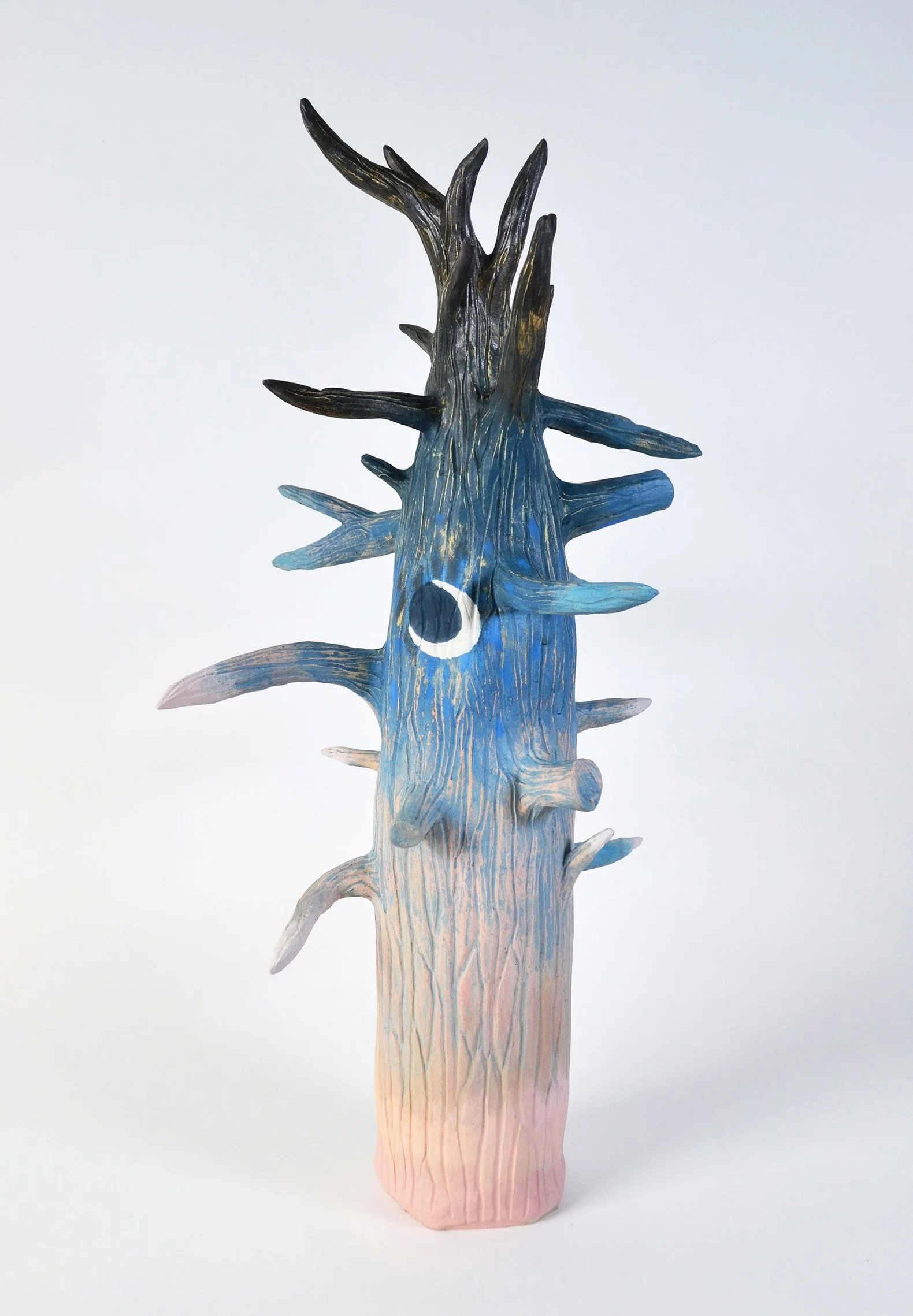
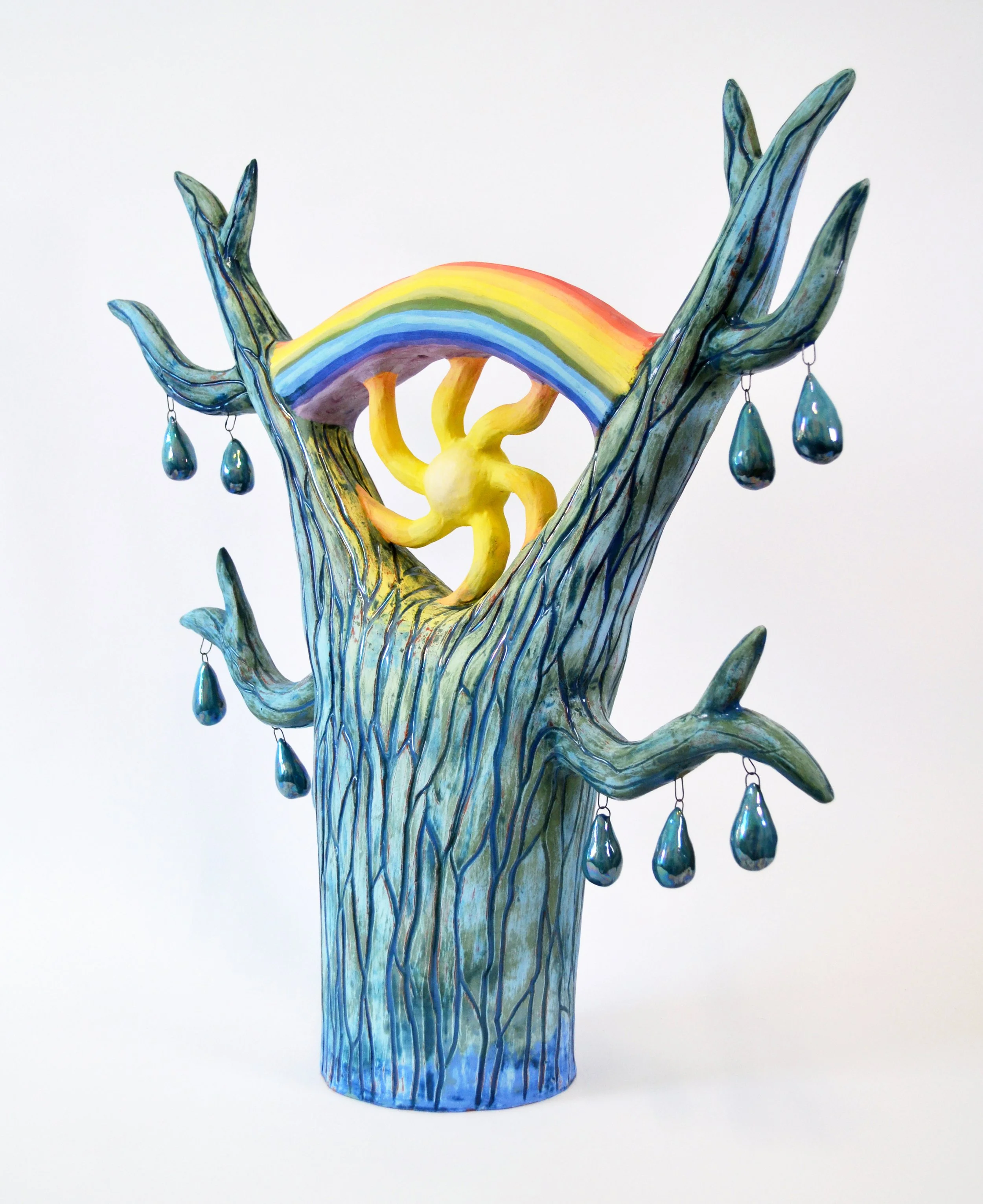
Taking inspiration from the late summer and early fall seasons in Maine, practice fundamental handbuilding techniques to translate small to mid-size natural forms like bugs, birds, plants, and flowers. Once our forms are built, we will surface them with colored terra sigillata: a material made from decanted clay particles combined with mason stains that is brushed directly onto greenware to achieve colorfully painted (and painterly) surfaces. We will reflect on seasonal color palettes, changing light, and draw inspiration from the landscape and its inhabitants. I will prepare a full spectrum of terra sigillatas (ROYGBIV + white + black) for participants to use on clay of their choice: terracotta earthenware, white low-fire clay, or mid-range white stoneware. Work will be formed and surfaced while at Haystack and taken with participants to fire in their home or school studios.
Materials
Facilitator will supply
Terracotta Cone 04/Low Fire Moist Clay/25lb Bag (x2)
OM4 Ball Clay
Red Art Clay
Sodium Silicate
Mason Stains:
Dark Red #6021 (red)
Mango #6030 (orange)
Titanium Yellow #6485 (dark yellow)
Praseodymium #6450 (light yellow)
Grass Green #6206 (green)
Zirconium Vanadium Blue #6315 (light blue)
Mazarine Blue #6300 (dark blue)
Alpine Rose #6001 (dark rose)
Lavender #6319 (lavender)
Crocus Martis (deep purple)
Black Copper Oxide + Manganese Dioxide + Cobalt Carbonate (black)
Titanium Dioxide (off-white)
Materials to bring
Terracotta Low FIre/Cone 04 Moist Clay, 25lb Bag OR White Low Fire Clay or Mid-Range Stoneware Moist Clay, 25lb Bag
Individual Set of Clay Tools & Toolbox:
wire tool
loop tool
wooden clay tools
needle tool
toothed rib
Metal rib and/or smooth rib
selection of brushes for terra sigillata (smooth or coarse depending on your preference, I prefer smooth)
Half pint/pint/quart/or clean yogurt containers with lids for mixing custom colors and taking sig home
Plastic palette or similar
Plastic/dry cleaning plastic for wrapping work
Towel
Apron
Small Buckets for water
Cardboard box and plenty of packing material for transporting your greenware at the end of the weekend
Biography
Grace Hager (they/them, she/her) is an interdisciplinary painter and ceramic sculptor. Her work locates the natural world as a realm of possibility: a source of transformative encounters that generate awe, positioning the magical within the observable world. She received a Master of Fine Arts in 2023 and Bachelor of Fine Arts in Painting with a Minor in Art History in 2015 both from Maine College of Art & Design. Grace has exhibited nationwide, most recently at the NADA Ceramics Market, NYC Crit Club, Center for Maine Contemporary Art, and Caldbeck Gallery.
She is the recipient of multiple awards including a Fellowship in Painting from Vermont Studio Center, a CERF+ Get Ready Grant, a Belvedere Fund Grant, and a Puffin Foundation Project Grant. She has been an artist-in-residence at the Elizabeth Murray Artist Residency, Cuttyhunk Island Artist Residency, and Wassaic Project, among others. She currently lives and works in Southern Maine.
Ashley Page (she/her): Sculptural Botanical Papermaking (Graphics - Haystack)
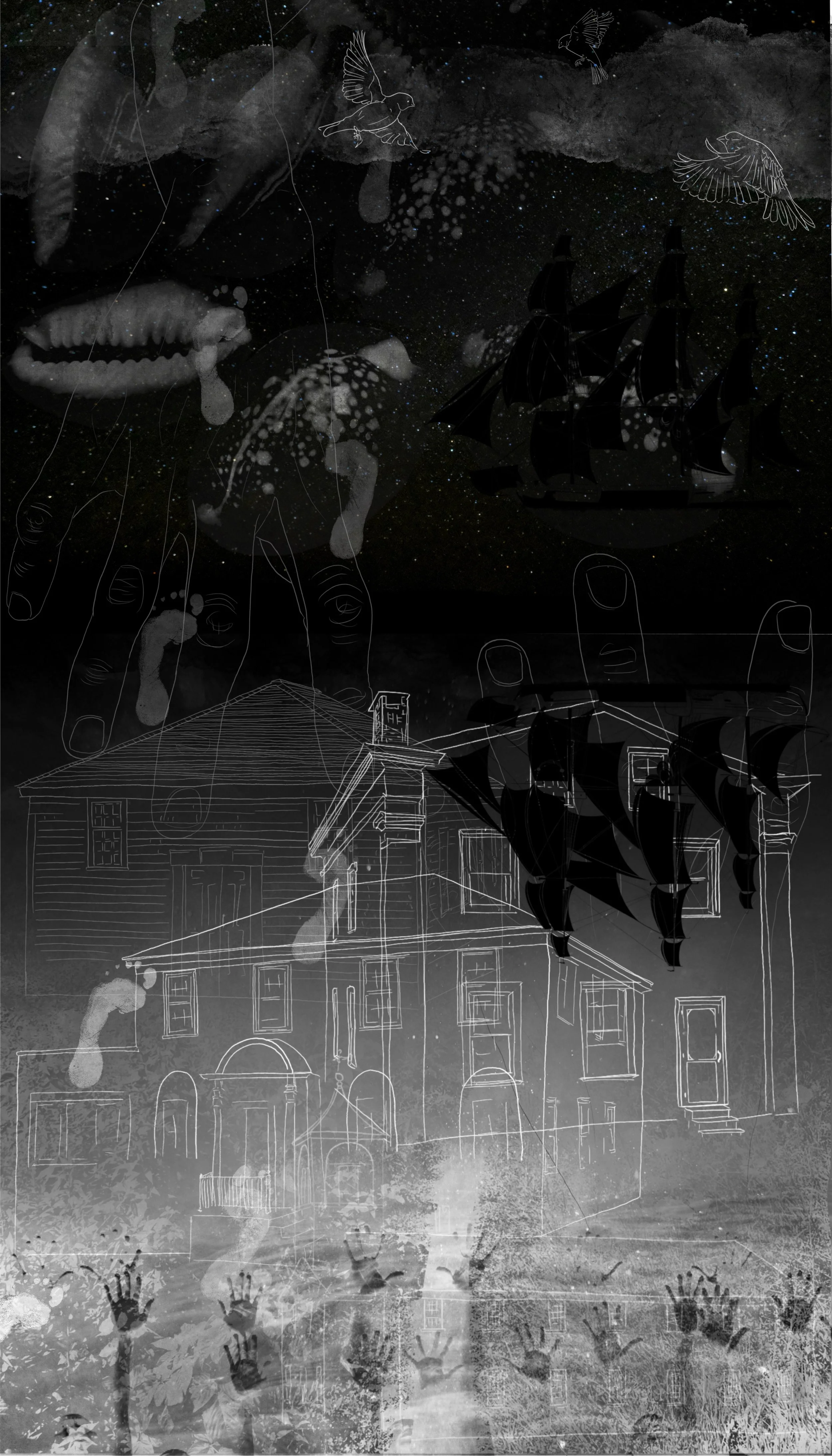
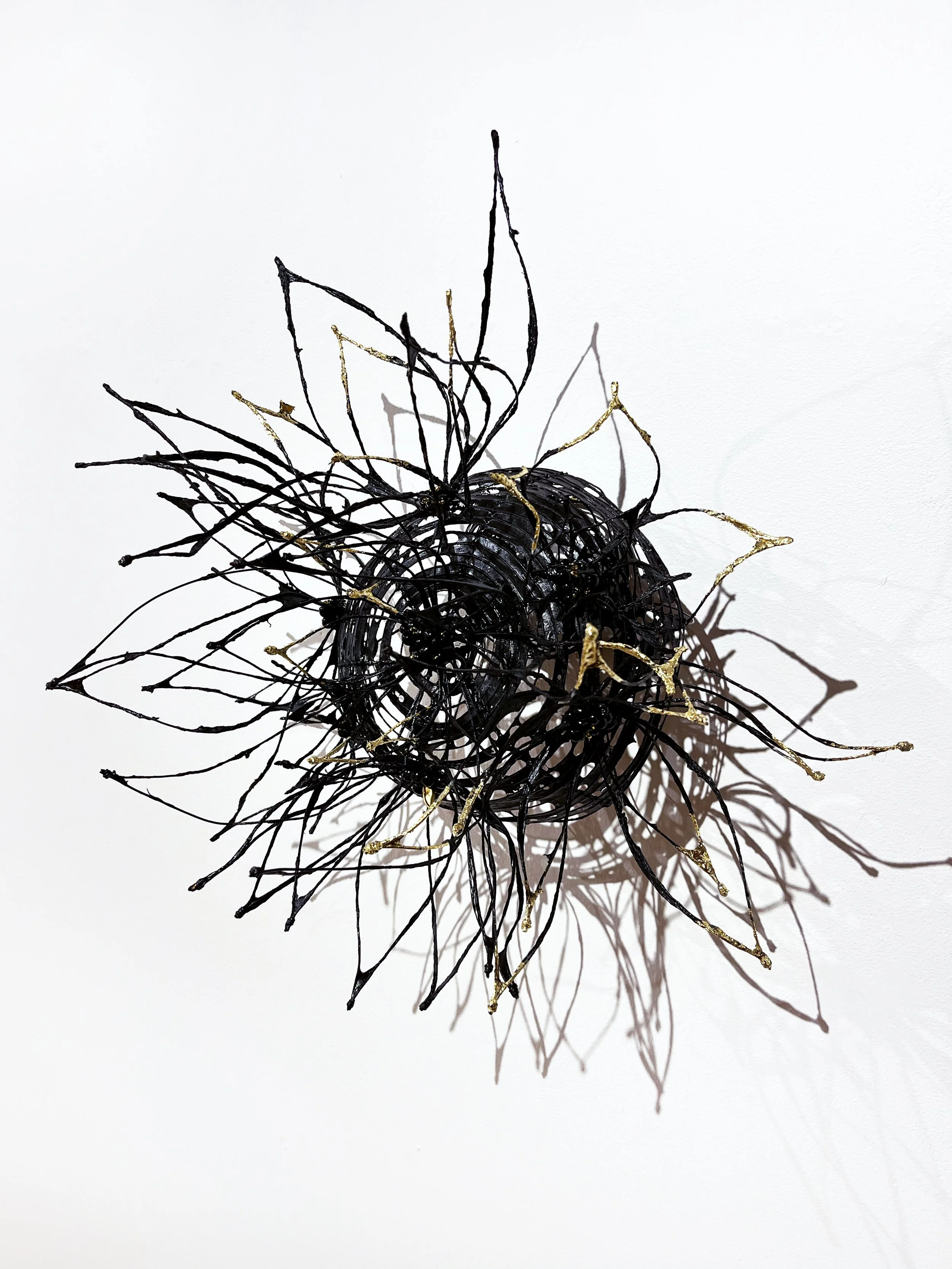
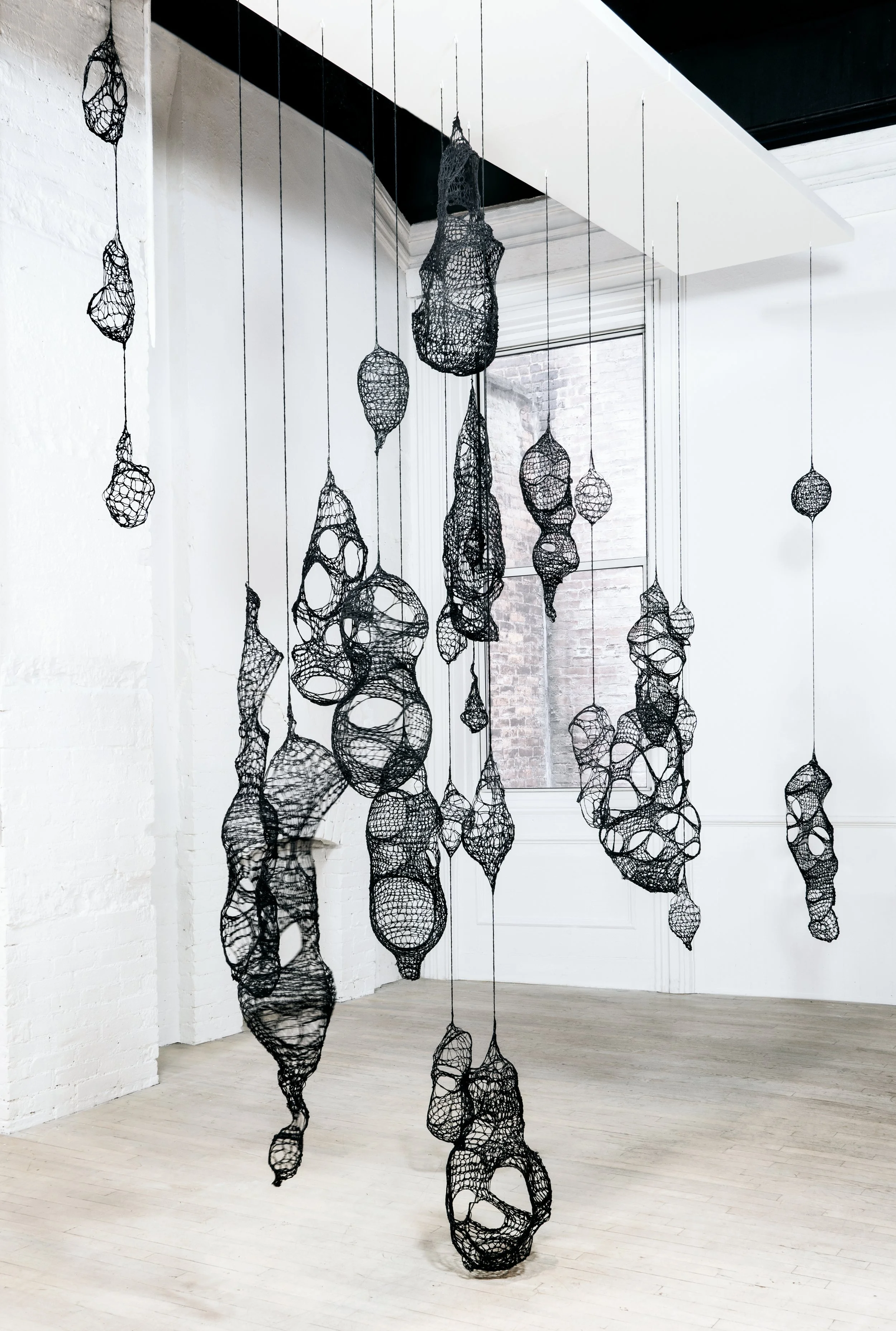
Create blooms that will last forever! Participants will get to learn the basics of papermaking, while integrating cold-connection wire sculpture that is based on botanical forms and things seen in nature. Crafting stemmed flowers, curling vines, wide leaves, and more, attendees will play with scale and texture to create their own personal bouquets.
Materials
Facilitator will supply
Abaca pulp
Moulds/deckles
Thick pellons
Pellon
Pliers
18 gauge, 16 gauge, and 24 gauge wire
scissors
Materials to bring
Thick work gloves to protect hands while working with the wire
Eye goggles/safety glasses
Aprons
Paint (watercolor, gouache, acrylics, spray paint)
Sketchbook
Paint brushes
Personal scissors/ small snips
Markmaking tools
Biography
Ashley Page (she/hers) is an interdisciplinary artist living and working in Portland, ME. She holds a BFA in Sculpture and a minor in Public Engagement from the Maine College of Art & Design. Her studio practice and curatorial projects serve as vehicles for storytelling, representation, and intergenerational exchange. Her artwork has been exhibited at museums and institutions including the Portland Museum of Art, Hunterdon Art Museum, the Tate House Museum, University of Southern Maine Art Gallery. As a teaching artist, she has taught various workshops in textiles, papermaking, and printmaking at Peters Valley School of Craft, the University of Maine Orono, Waterfall Arts, Coastal Maine Botanical Gardens and others.
Website: ashleypagestudio.com
Social media handles: IG ashleypage.studio
Jared Lank (he/him): Co-authoring with Nature - using cyanotypes as a visual storytelling tool for reflection on time, place, and presence (Gateway - Haystack)
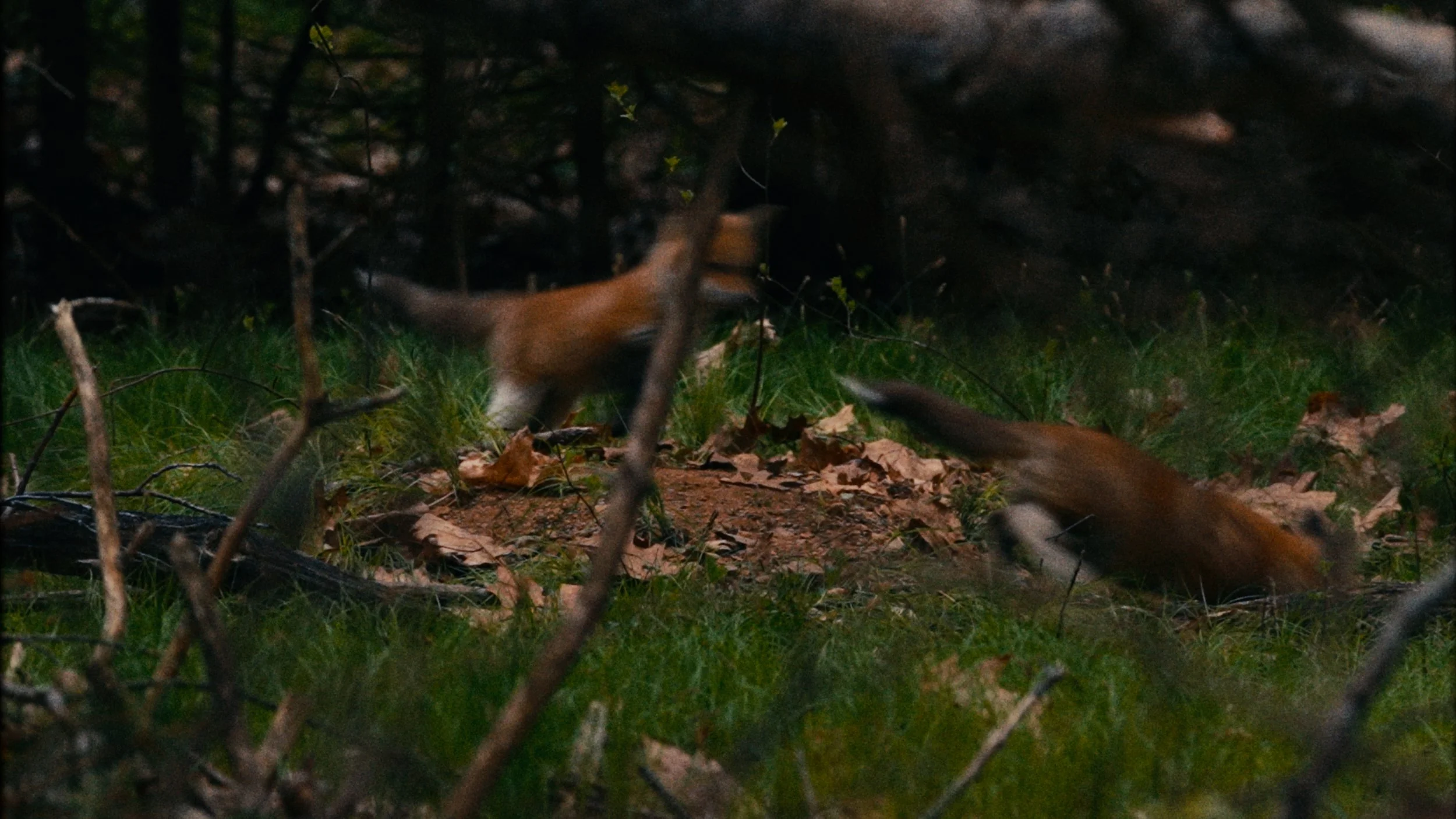
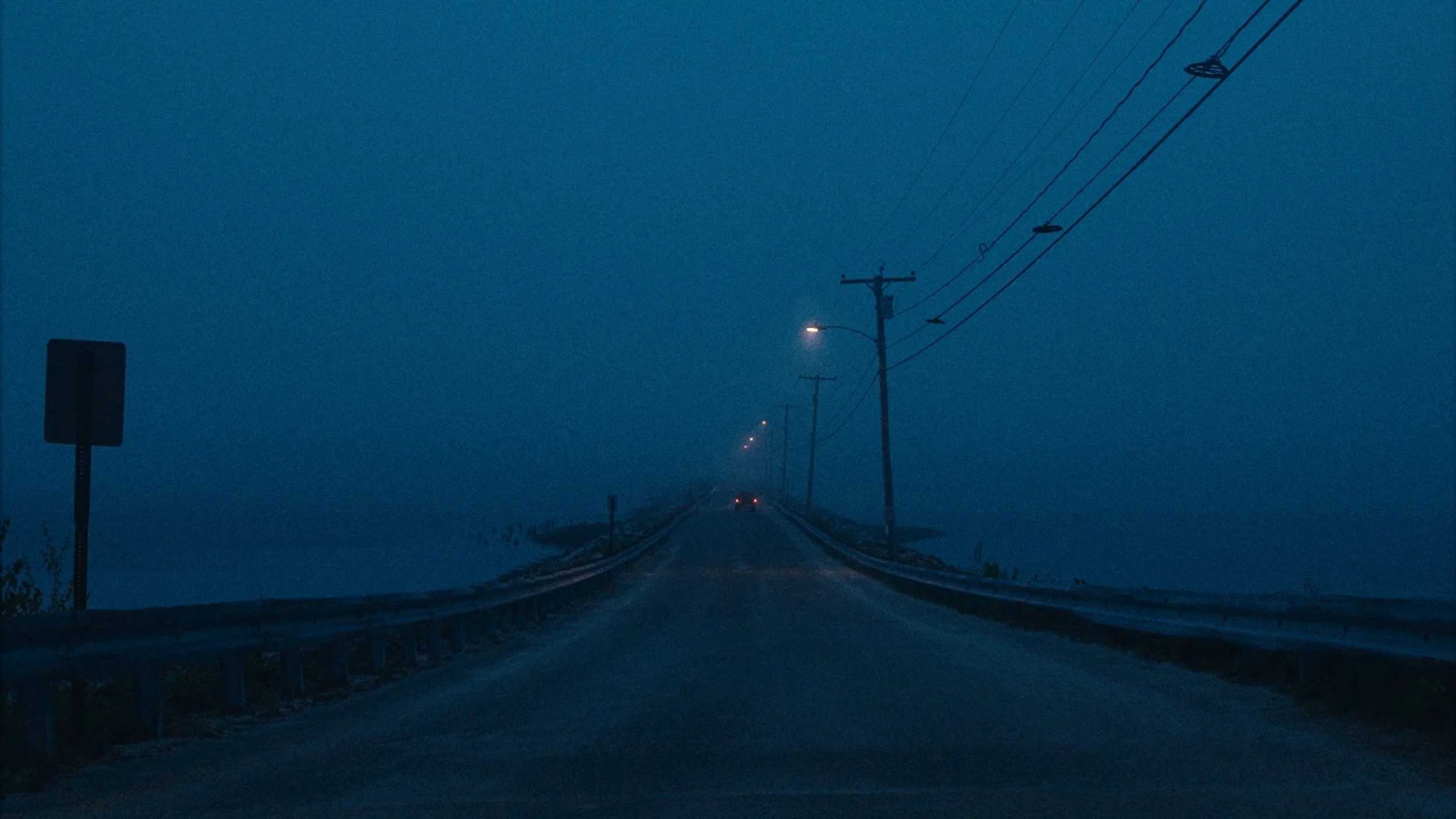
In this workshop we will use a combination of observation, written reflection, and cameraless photography to create cyanotype and anthotype works. Participants will learn the basics of cameraless cyanotype and anthotype photography from material prep to printing. They will also learn the fundamentals of observational photography and field journaling.
Materials
Facilitator will supply
2- Part Cyanotype Powder mix
Transparency paper for negative printing
Cyanotype paper
Acrylic sheets for printing
Clips for printing + hang drying
Disposable gloves
Materials to bring
Digital copies of photos for printing or physicals that can be scanned
Materials for print overlaying + collaging
A journal for writing observations in.
Biography
Jared Lank is an award-winning Mi’kmaq filmmaker drawn to stories of identity and belonging, shaped by cultural memory, myth, and the quiet presence of what’s been lost. Based on the ancestral lands of the Wabanaki along the coast of Maine, his work explores cultural loss, assimilation, and the lasting impacts of colonial systems on
Indigenous communities through a visually driven, metaphor-rich lens. His debut short film, Bay of Herons, premiered at the 2024 Sundance Film Festival and screened internationally, earning the Indigenous Perspectives Award at Regard: Saguenay International Short Film Festival and Best Short at the Bates Film Festival. He is currently developing his first feature, FORERUNNER, as a 2025 Sundance Institute Native Lab Fellow and completing a Sundance supported proof-of-concept short of the same name.