

MAEA’s annual Fall Conference bridges boundaries between our personal and professional art realms. This is a chance to participate as artists in exciting workshops, immersed in every stage of creativity. It is also an opportunity to connect with fellow art teachers, meet with old friends, and make new ones. This creative and productive late-September weekend serves to invigorate us as we begin the school year.
The next Fall Conference will take place September 24-26, 2027.
Details coming this spring.
In the meantime, enjoy a review of the workshops from Fall Conference 2026 below:
“The Shape of Here,” OUR 2026 FALL CONFERENCE, IS BEHIND US.
EXPLORE HIGHLIGHTS BELOW:
September 25 - 27, 2026
Haystack Mountain School of Crafts, Deer Isle & Monson Arts, Monson
Enormous thanks to Conference Co-Chairs Nat Shacklett and Charlotte Caron!
NARRATIVE EMBROIDERY: PAYING ATTENTION TO PLAYFULNESS with Maggie Muth (she/they) — haystack
By Becky Poliquin
Maggie Muth started her workshop with a “jump right in” kind of approach, reminding attendees of the importance of play. Each student was given a secret word to stitch onto a random piece of fabric as a warm-up activity. Maggie offered gentle guidance and freedom while encouraging workshop attendees to “just do it and not be perfect.” The results were varied as attendees all stitched in our own unique styles and realized how many possibilities there were within this one simple activity.
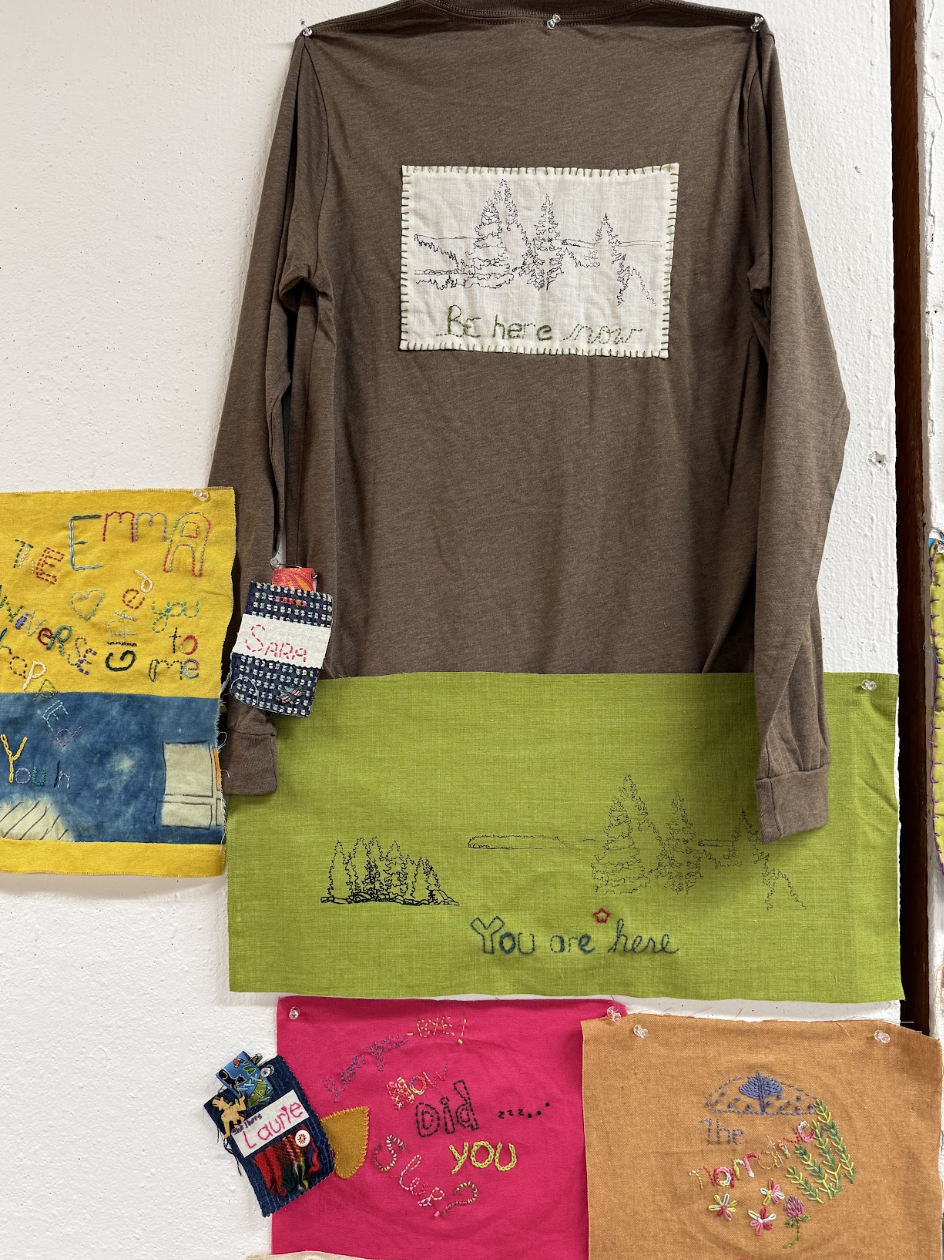
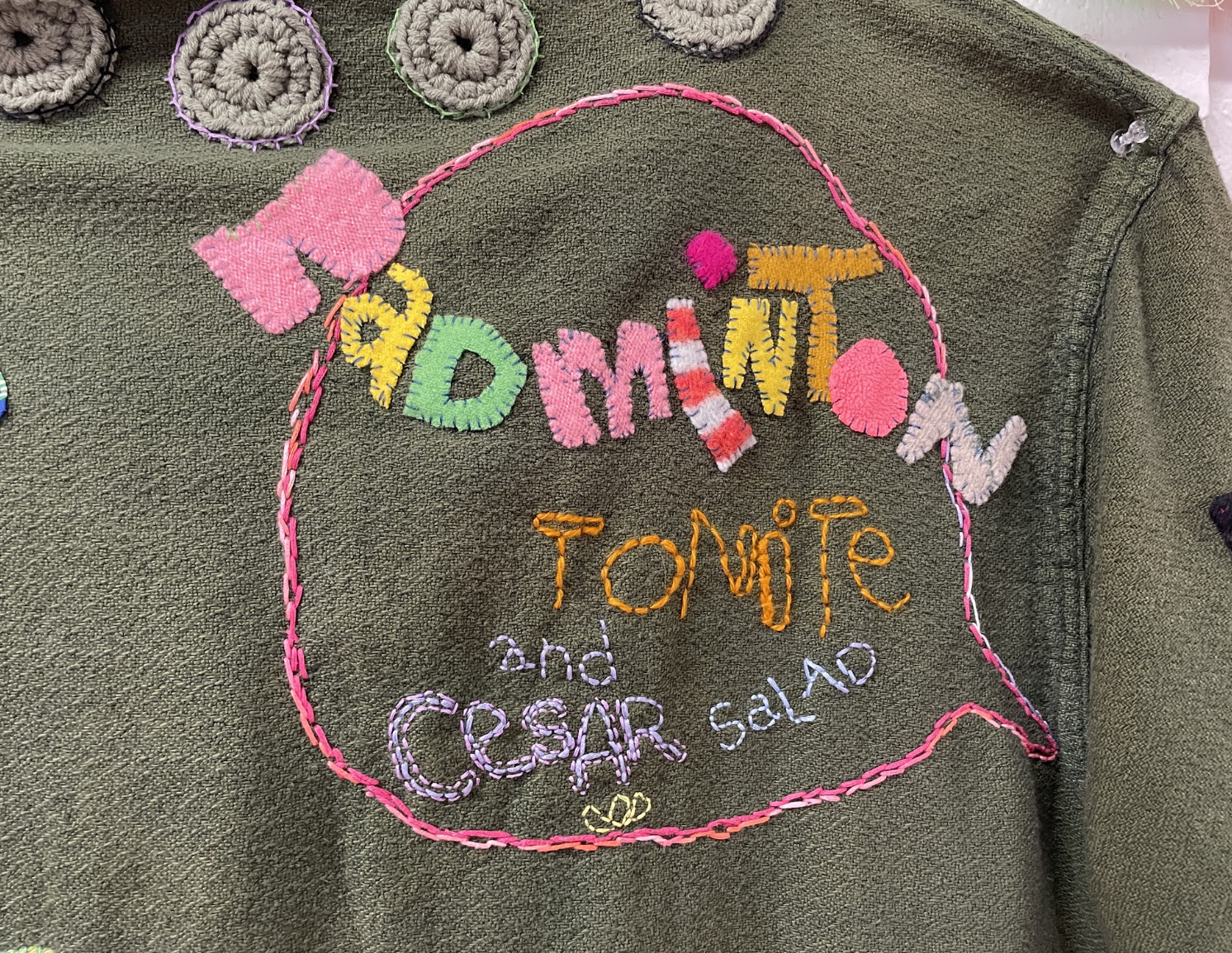
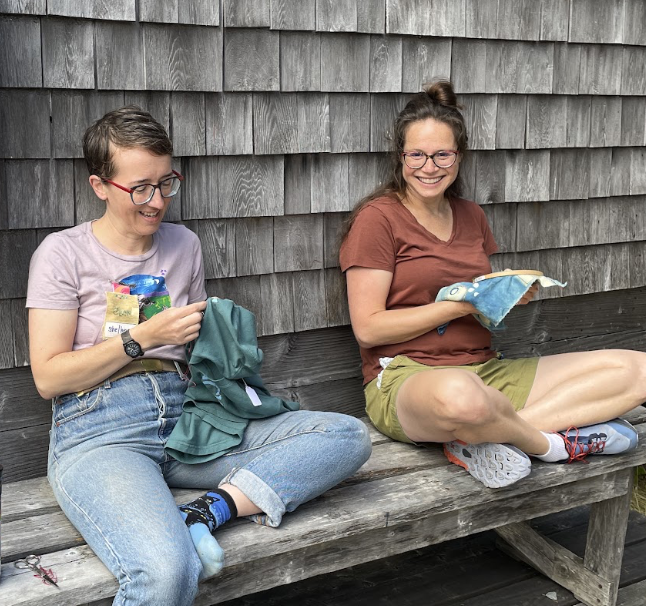
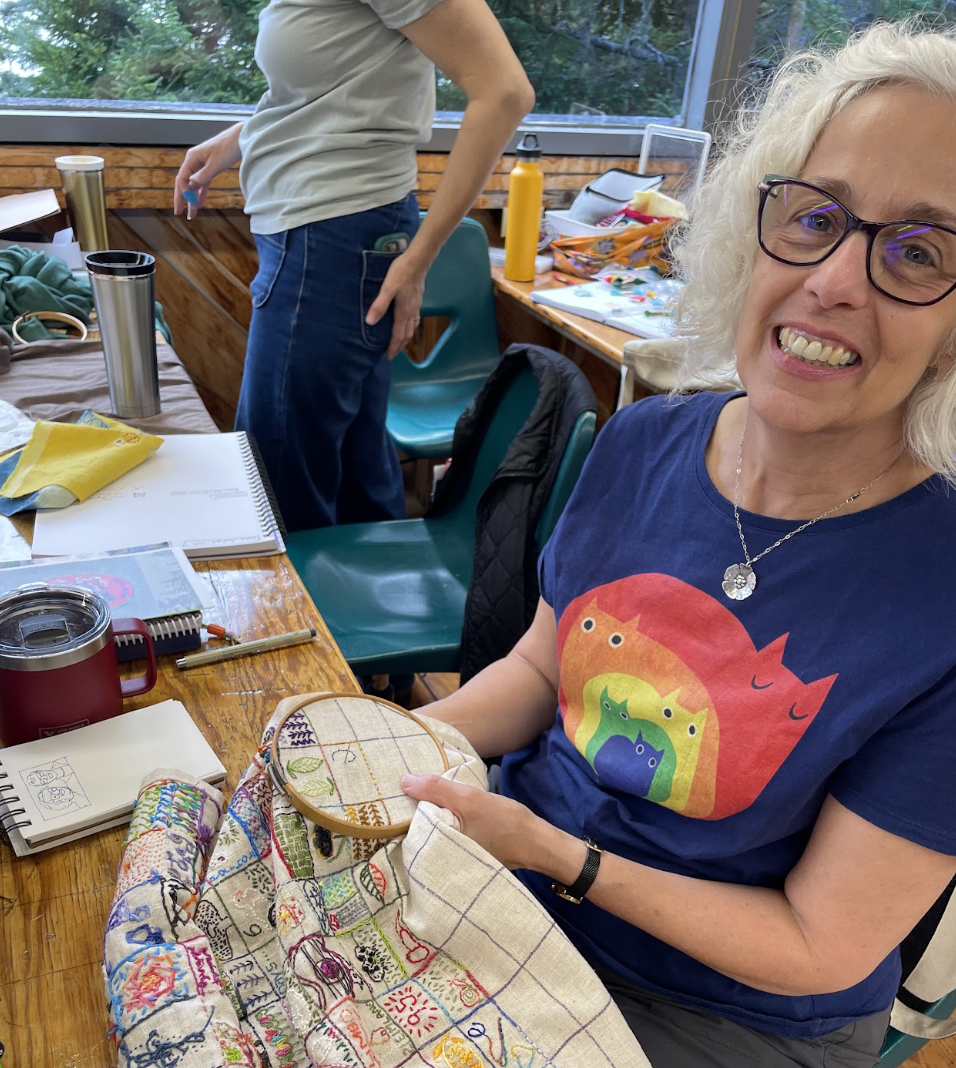
The workshop continued in the same light-hearted and relaxing manner, even as some of us stitched through real-world problems and used this activity to release difficult emotions. Others used this as an opportunity to highlight important memories and family quotes or random things on our minds.
Maggie’s work adorned the studio, offering whimsy and inspiration, as did some of her favorite books. She shared tidbits of information throughout the workshop about technique, her own work, and where her inspiration came from — which ranged from the mundane, such as grocery lists and text messages, to life events from family and her travels. Workshop attendees were encouraged to create our own narrative embroidery inspired by words from our everyday lives, from the mundane to the meaningful, and we did. It was a restorative, playful, and relaxing experience stitching the “Shape of Here.
LAYERED LIGHT: CYANOTYPE EXPLORATIONS with JENNIE DRISCOLL (She/her) — MONSON
By Erin Landry-Fowler
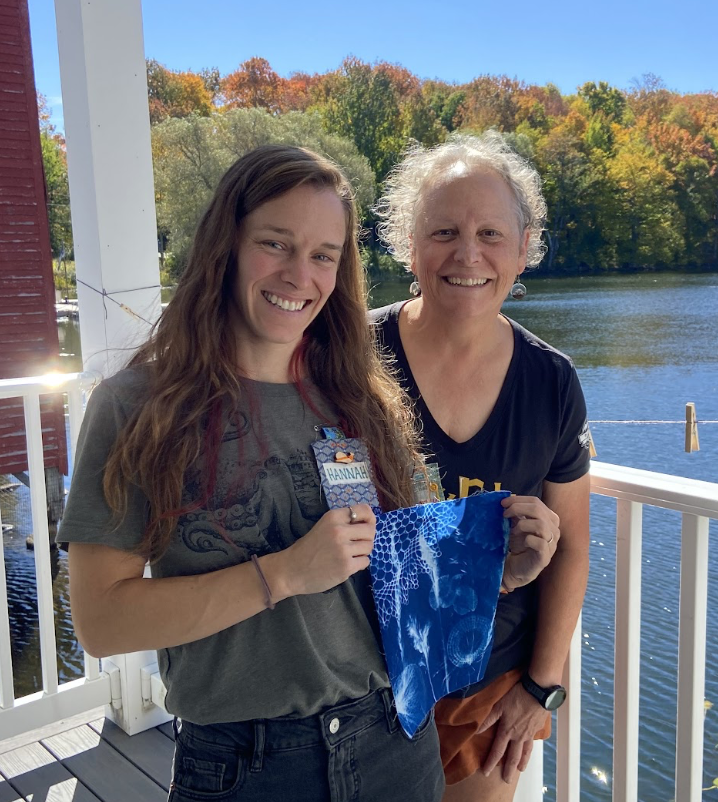
The MAEA lucked out with a beautiful weekend for the Fall Conference at Monson Arts. The weather was absolutely perfect for our cyanotype workshop with Jennie Driscoll.
Jennie guided us through the process of coating the paper and allowing it to dry before encouraging us to experiment with a range of approaches, using foraged plants, found objects, photo transparencies, and drawing techniques. We exposed our prints in the golden sunshine on the grass behind the studio, while loons took turns diving for fish in the lake.
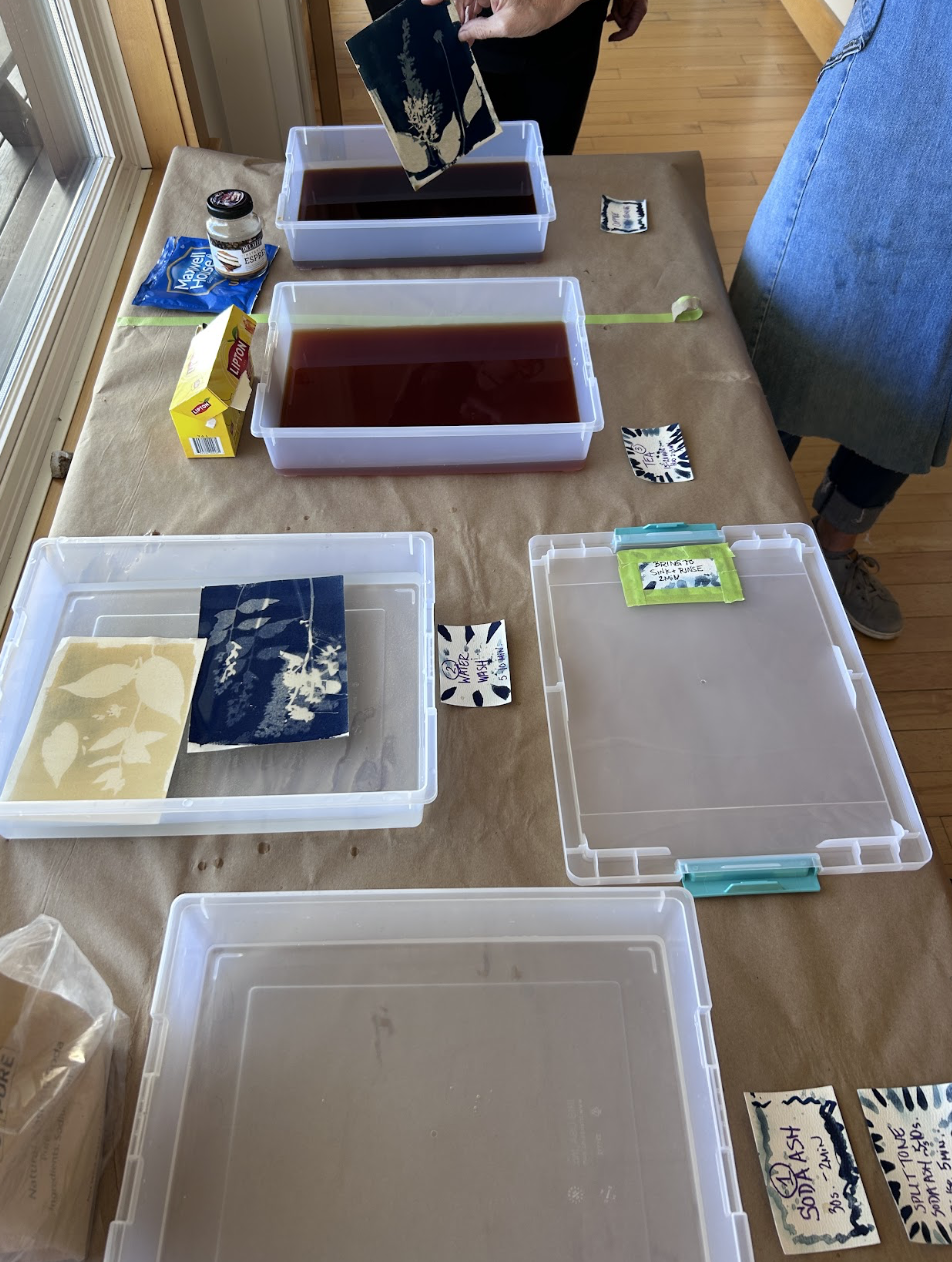
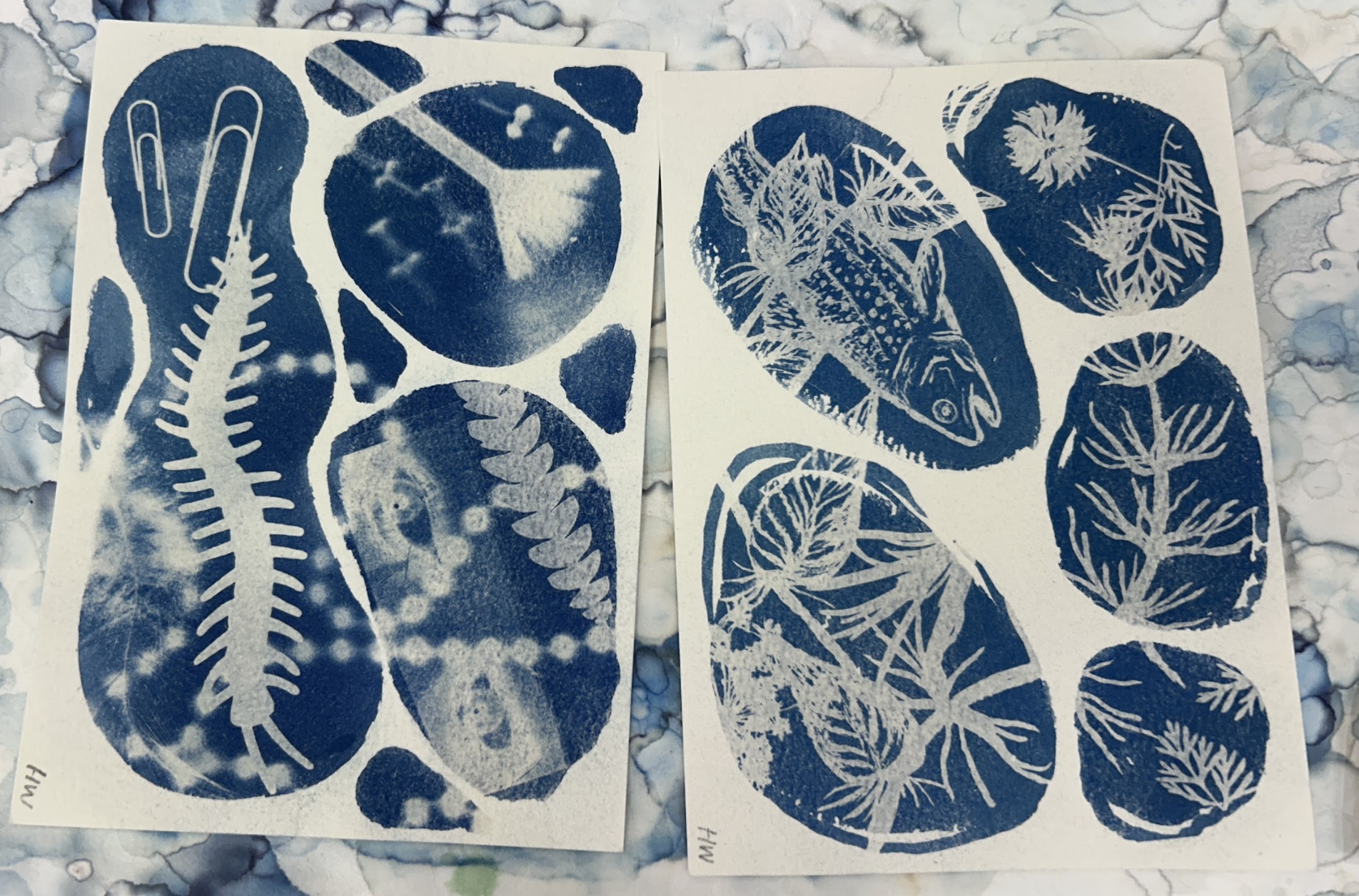
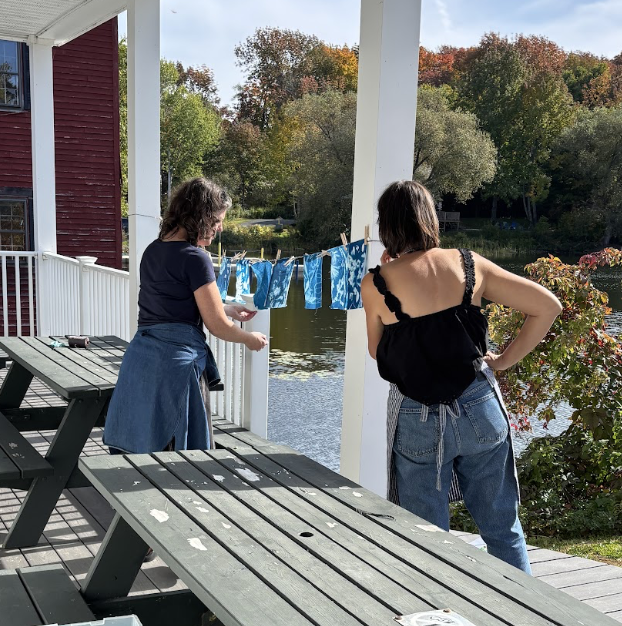
We also tried our hand at bleaching and toning the prints with washing soda, tea, and coffee. We tested out wet cyanotype techniques, using water, vinegar, salt, and turmeric to create exciting and unpredictable results. Teachers then transformed and enhanced their prints with markers, paint, pastels, stitching, and collage.
It was a fantastic weekend from start to finish: an inspiring workshop, an excellent instructor, gorgeous scenery, and delicious food. We’re already looking forward to our next visit to Monson Arts!
STORYTELLING WITH CRANKIES with Lucky Platt (She/Her) — haystack
By Andy Jones
Born out of the late 18th century’s “moving panorama,” crankies are a delightful marriage of illustrative storytelling and performance. A scroll is housed in a box, and as you crank the dowel handles, a story unfolds… or, more aptly put, scrolls by.
Before dinner, ordinary cardboard boxes began to transform into elaborate miniature stages. Some of us painted, cut, and adorned these boxes prior to having a concrete direction for our weekend project, allowing the process and materials to direct us. Others, though, had a clear vision of what would soon live in these boxes. Five-to-ten foot paper scrolls covered every horizontal surface of the small studio, as we drew, painted, printed, collaged, and even sewed our stories together. Themes of nature, loss, hope, and home tied our works together.
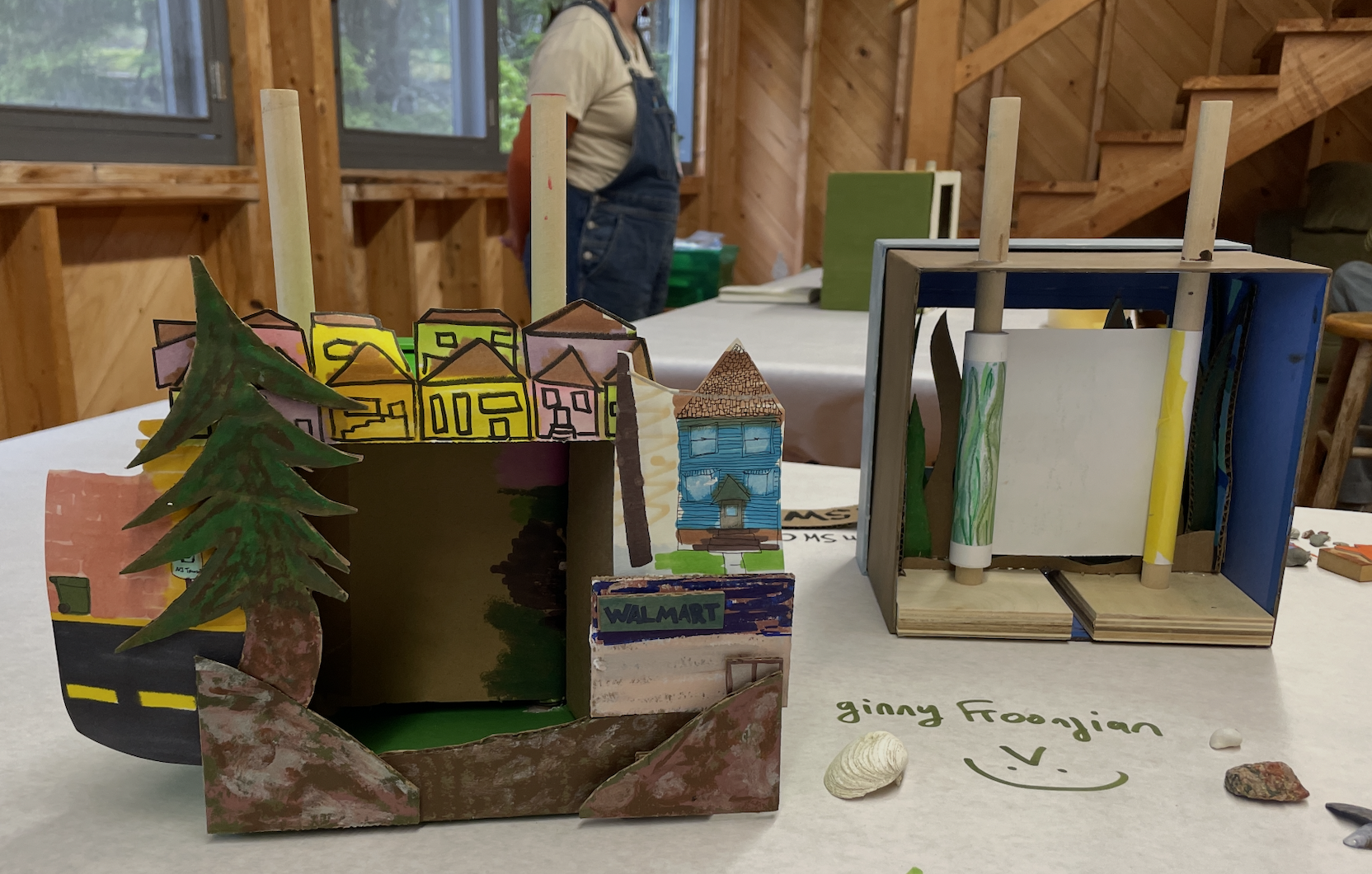
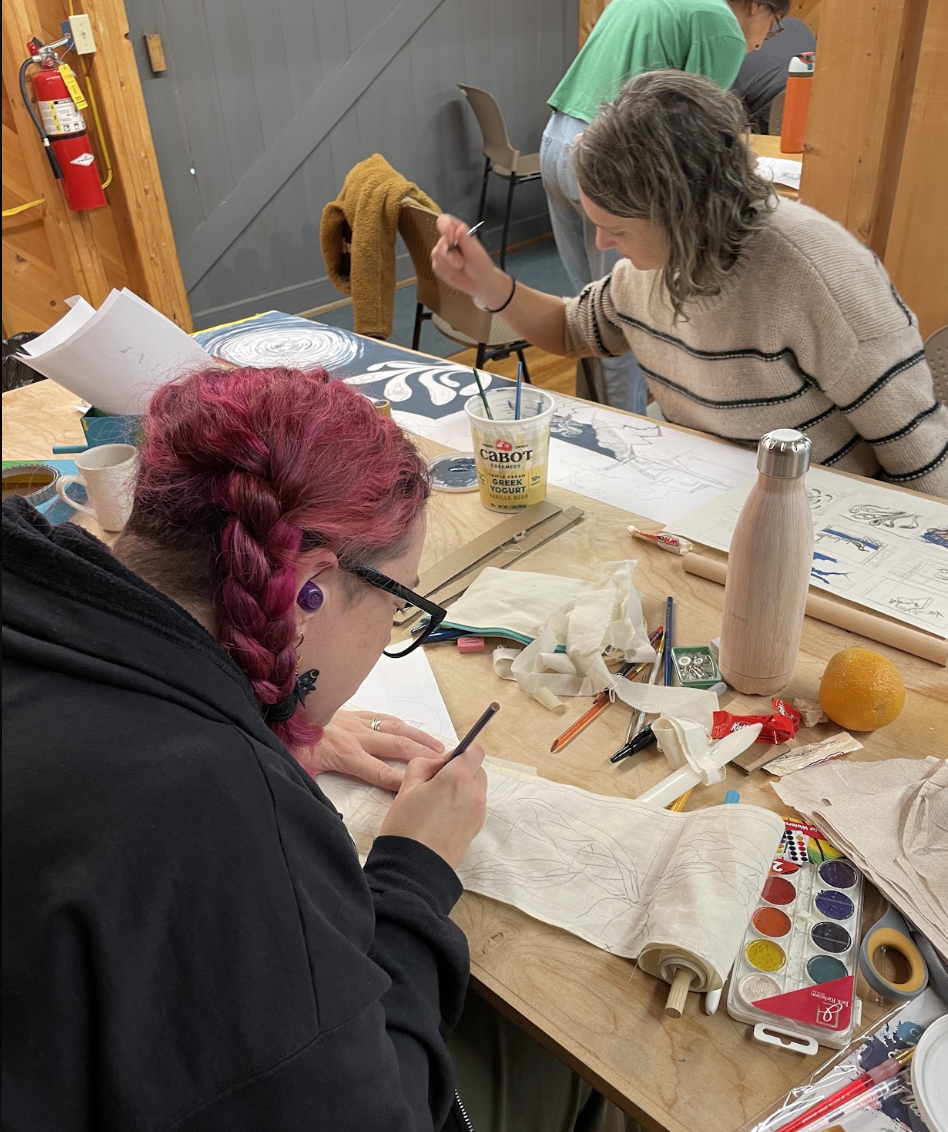
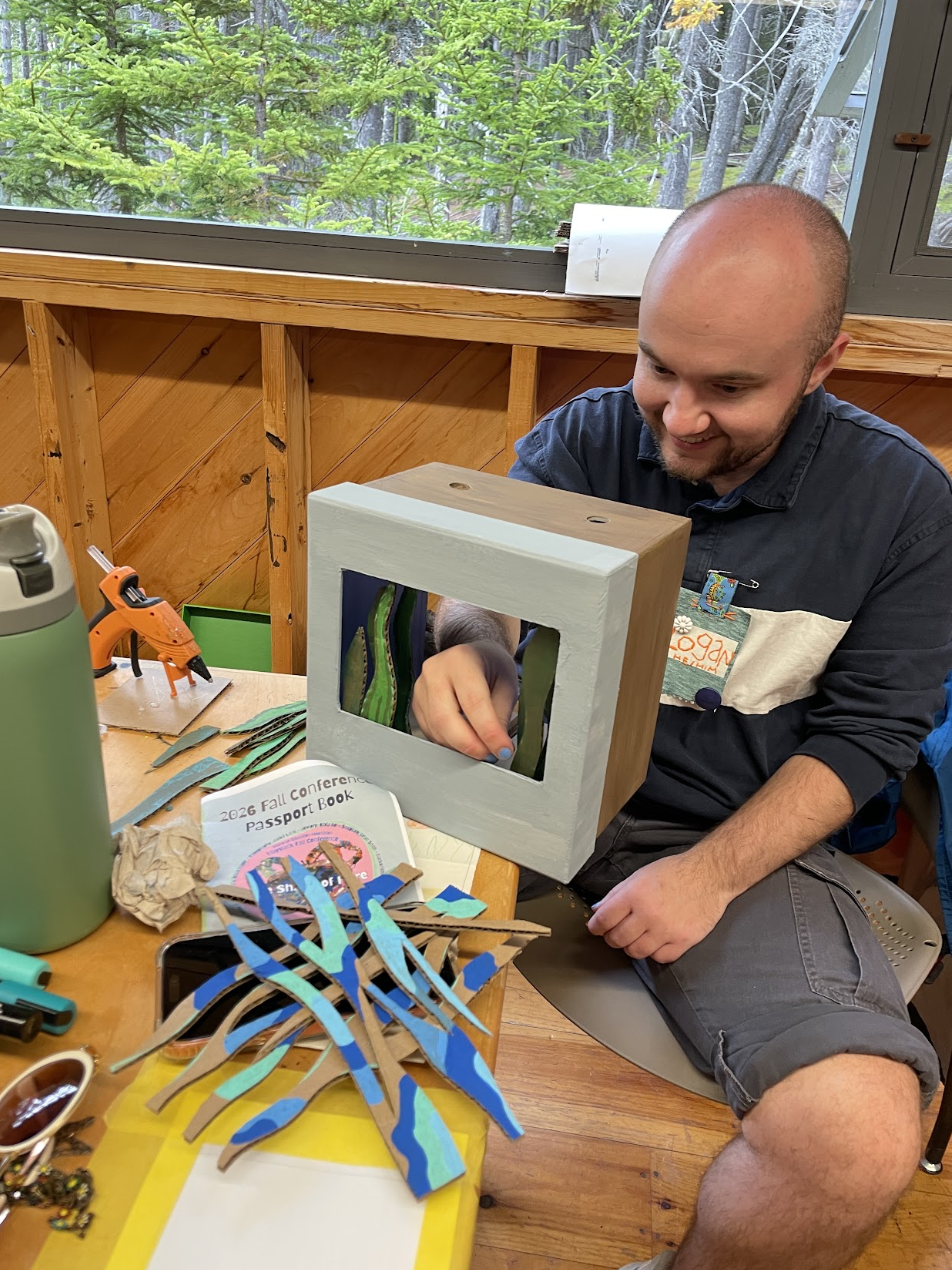
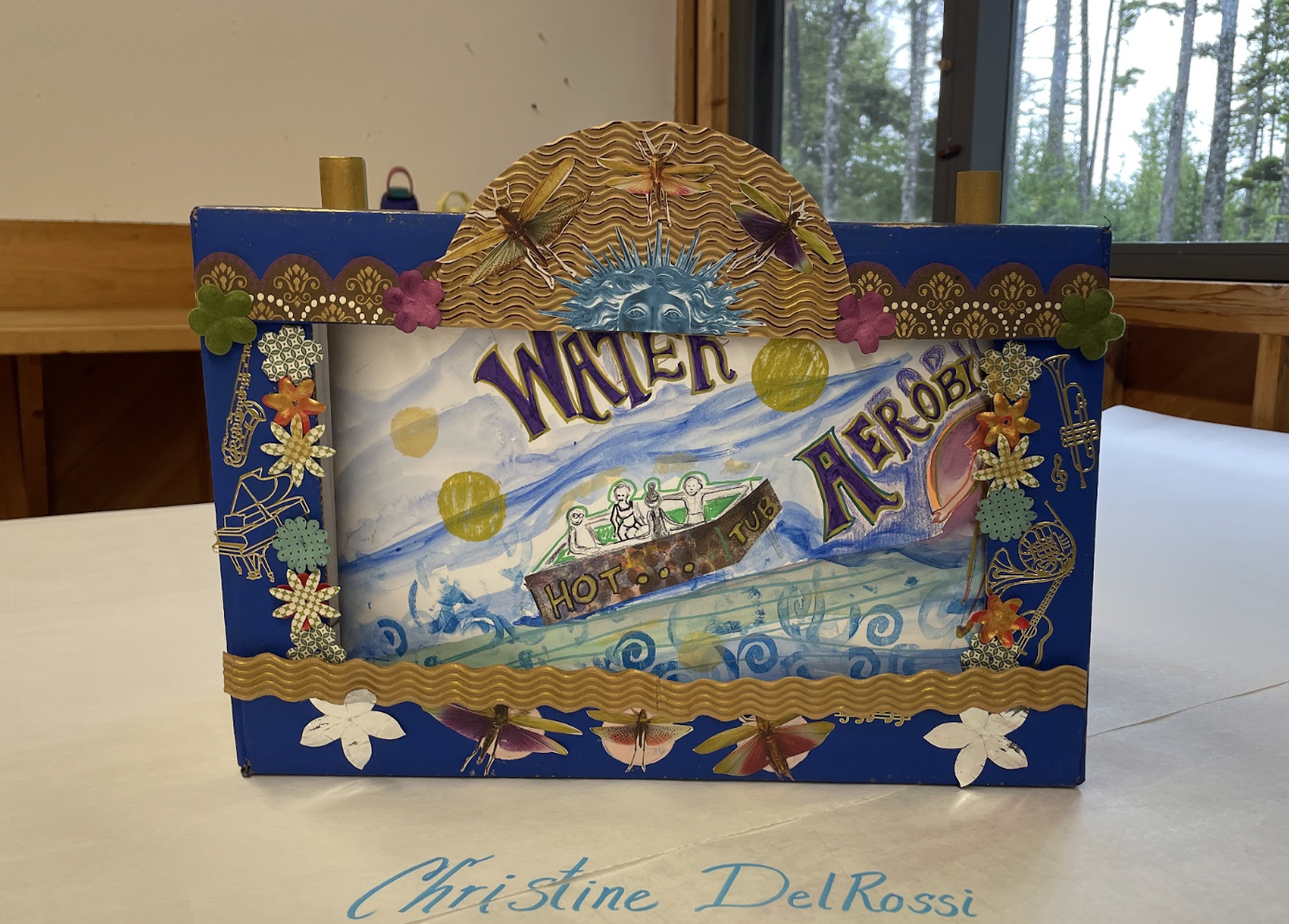
Lucky enthusiastically problem-solved with us, encouraging material exploration, attention to scale, and deeper consideration into our storytelling. She graciously shared a large range of art materials with us, allowing us to run wild with our ideas.
Come Sunday morning, the once-cluttered “cranky factory” became a cranky theater. Each artist performed their cranky to a captive audience, often found on the edge of their seats to catch as much detail as possible. Performances ranged from silent, emotional scrolls that elicited personal reflection to singing with instrumental accompaniment. Early on, Lucky reminded us that “We have sooo much time!” — which was met with incredulous, nervous laughter. But as a group we miraculously pulled together wonderful work in record time!
SHUCK IT: Steel Oyster knives with KIRAN CHAPMAN (HE/THEY) — Haystack
By Genna Worthley
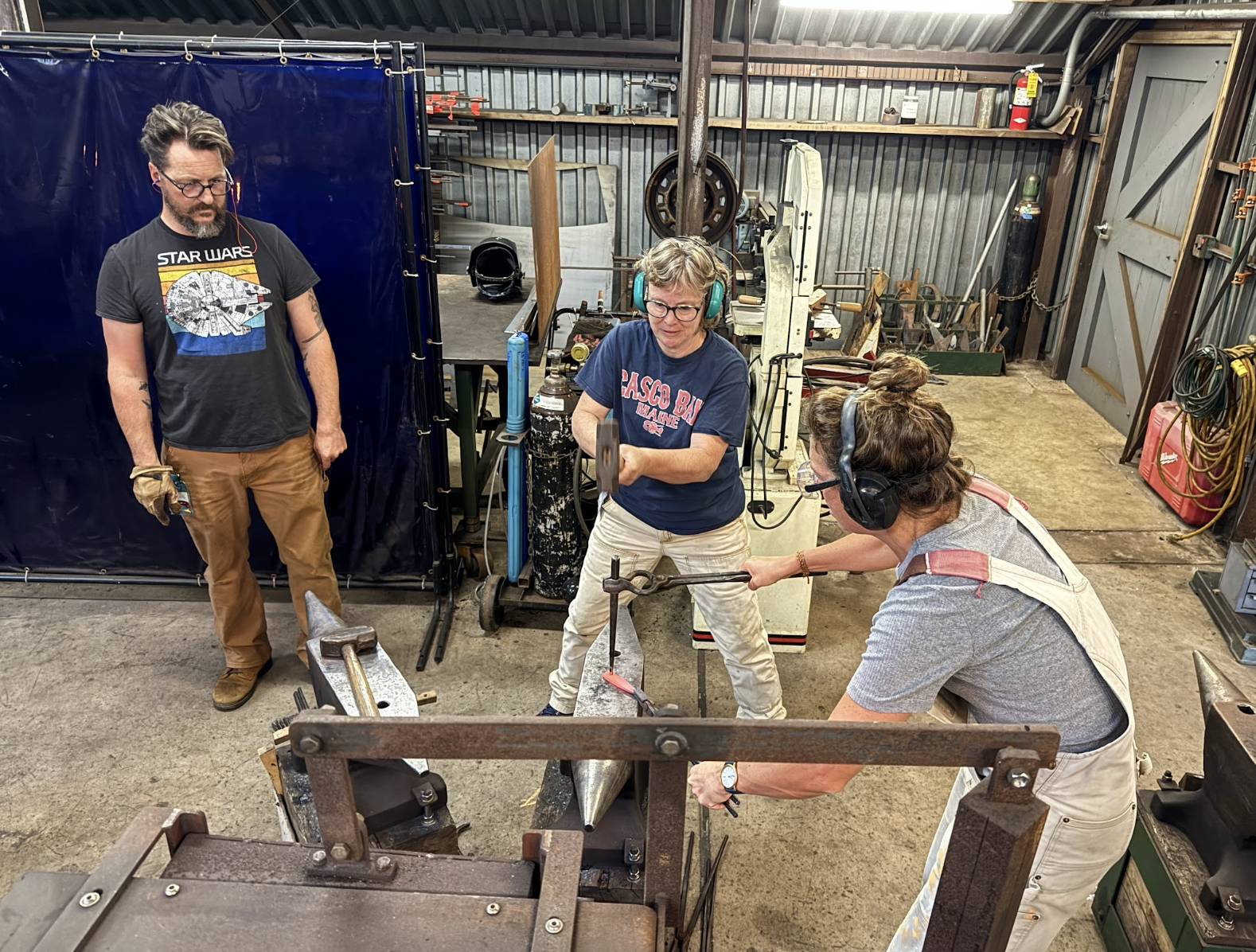
In Kiran’s “Shuck It” workshop, we blacksmithed oyster shuckers out of stainless steel, with a bottle opener at the base of the handle. The hot shop earned its name. With the forges getting up to 2,000°F and glowing orange metal being hammered out, you will never be cold in this workshop.
Participants gained knowledge of Japanese knife making, Kiran’s specialty, as he shared his passion and skills over the three-day weekend. Every strike of his hammer showed his mastery, moving the metal in one solid blow versus everyone else’s three to five. He offered insightful knowledge about the tools and skills as he demonstrated the forging process, giving us little bits to chew on at a time and keeping us appropriately whelmed, not over and not under.
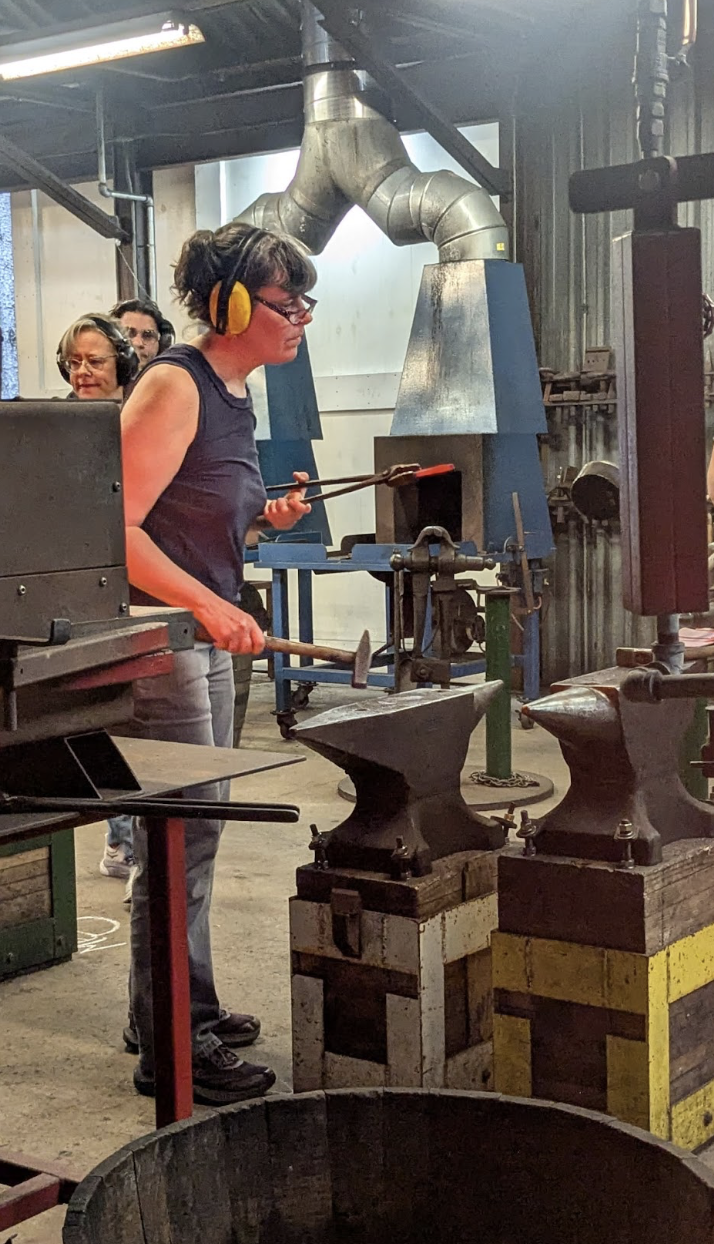
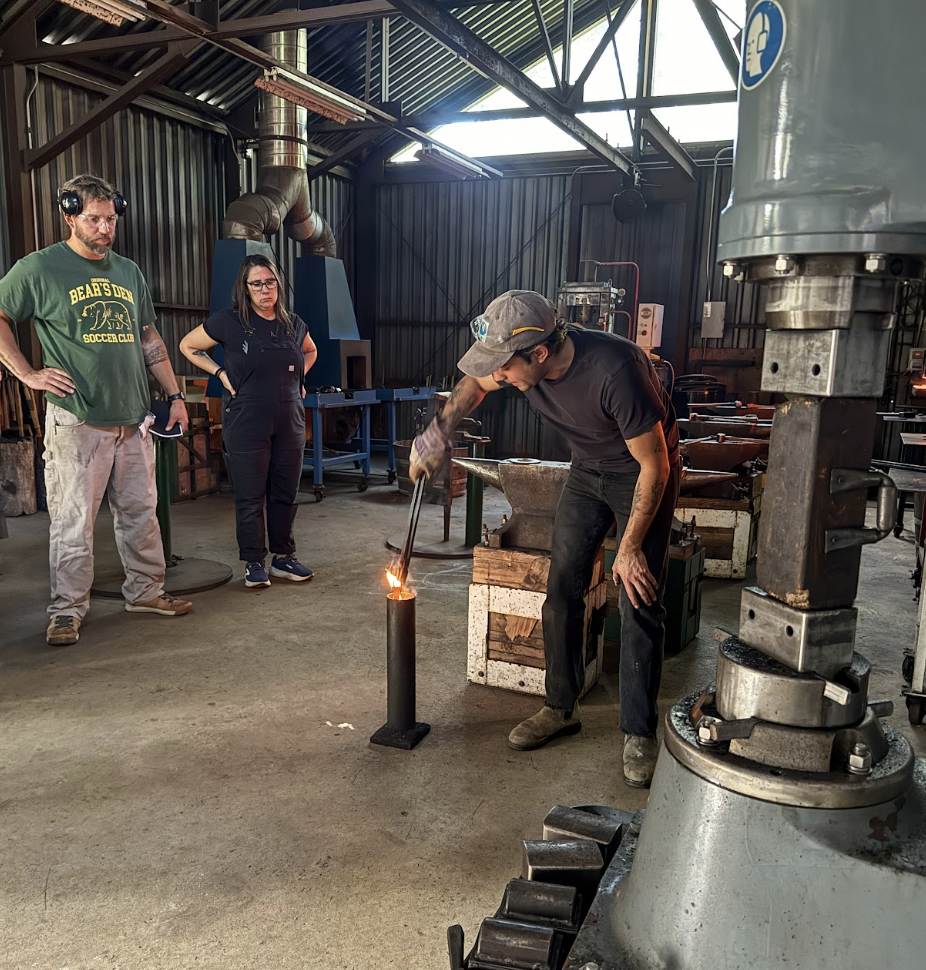
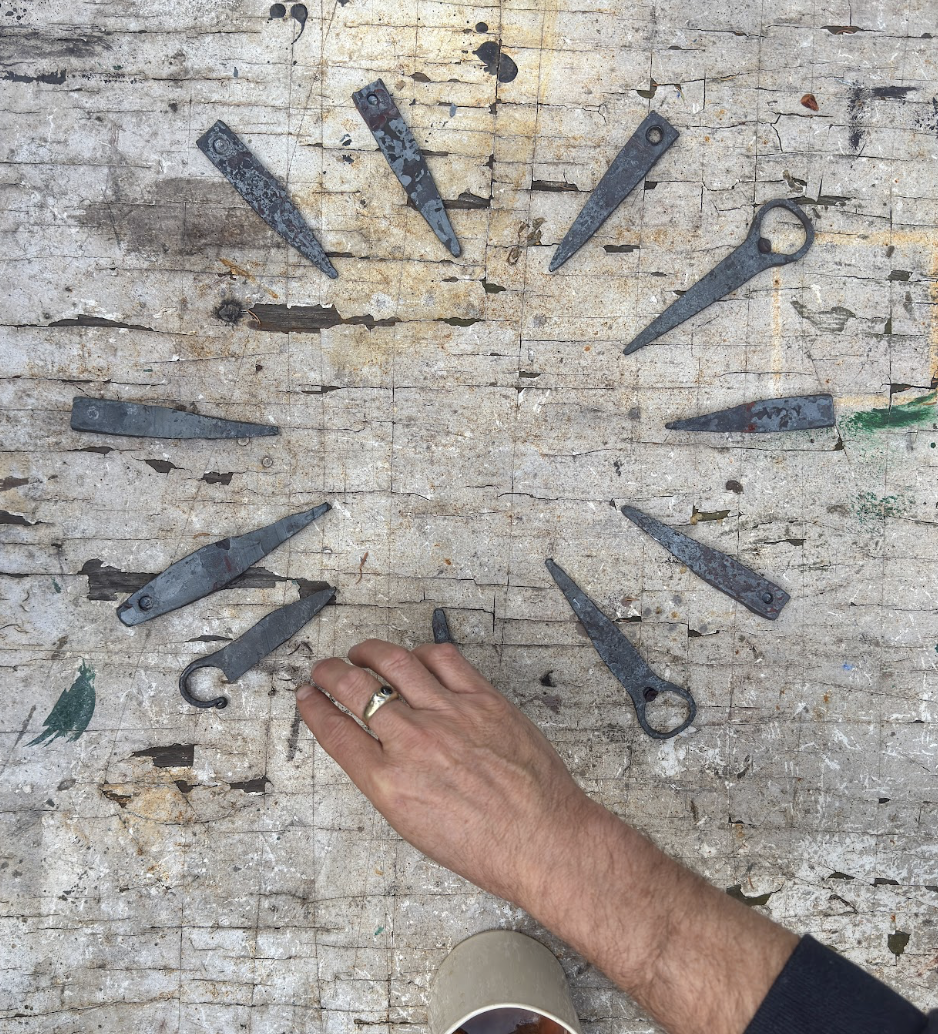
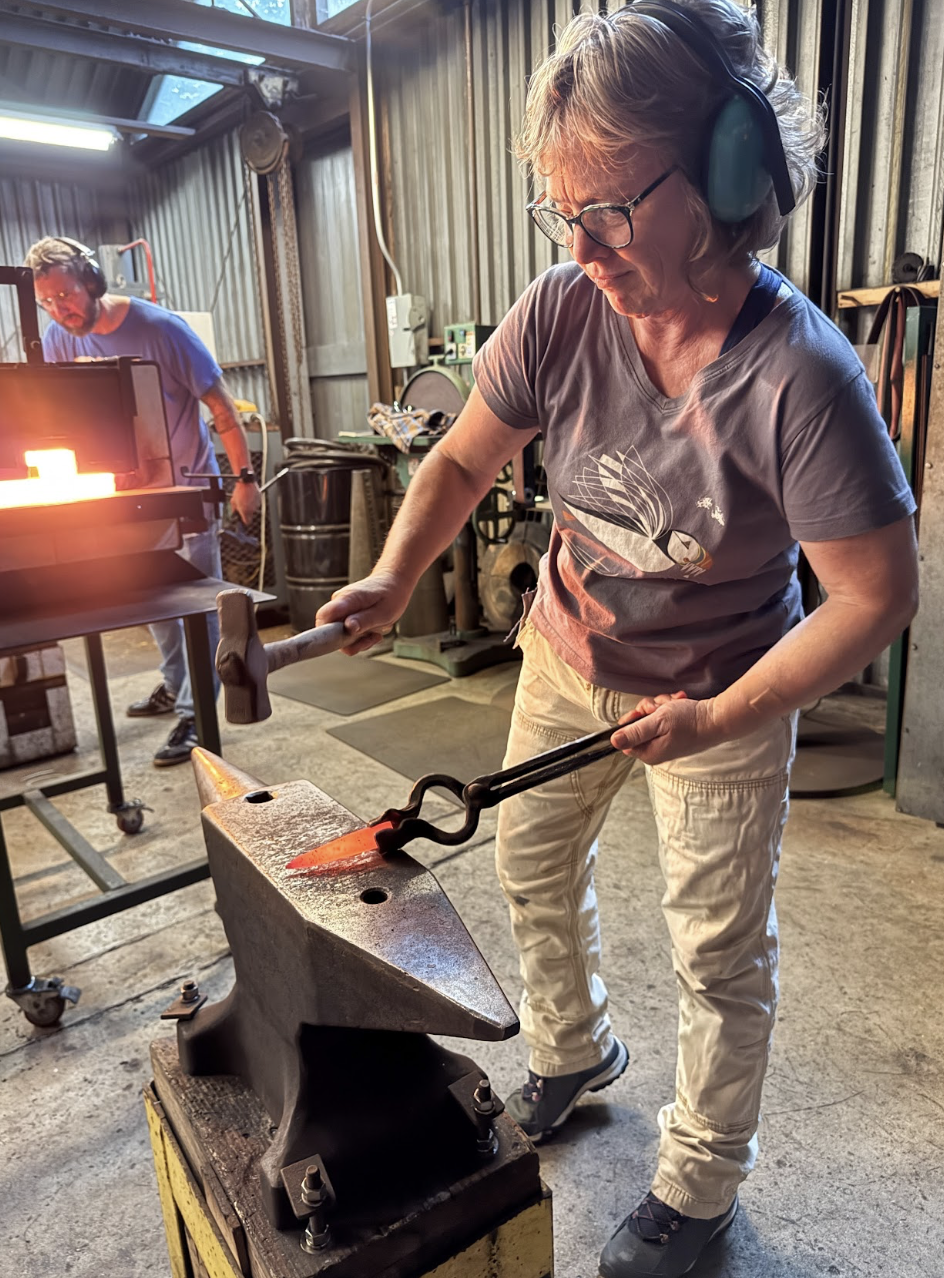
Kiran's calm, confident presence vibed with the whole class. He knew when to step in and when to leave us to figure it out for ourselves, and he was always willing and able to help. Though we were all making an oyster shucker, everyone’s turned out radically different and unique to their own craftsmanship.
We christened them at the end of the weekend by shucking oysters and opening some bottled cider!
Ceramic techniques and surfaces with JEMMA GASCOINE (SHE/HER) — monson
By Matt Johnson
Ten art educators got together in the studio of master potter Jemma Gacoine in beautiful Monson to take part in an amazing workshop. After an incredible lunch from James Beard Award-winning Chef MaryLou, we crammed into Monson Pottery to craft, throw, slump, and mold a variety of vessels. We began by combining and shaping pieces of styrofoam and covering them in plaster to make our own platter dish slump molds. While they were drying, educators of varied experience began throwing pots off a hump. There were several beginners alongside several veterans, which made for an amazing experience. Our preservice and new-to-the-profession teachers got to learn alongside educators 30 years their senior.
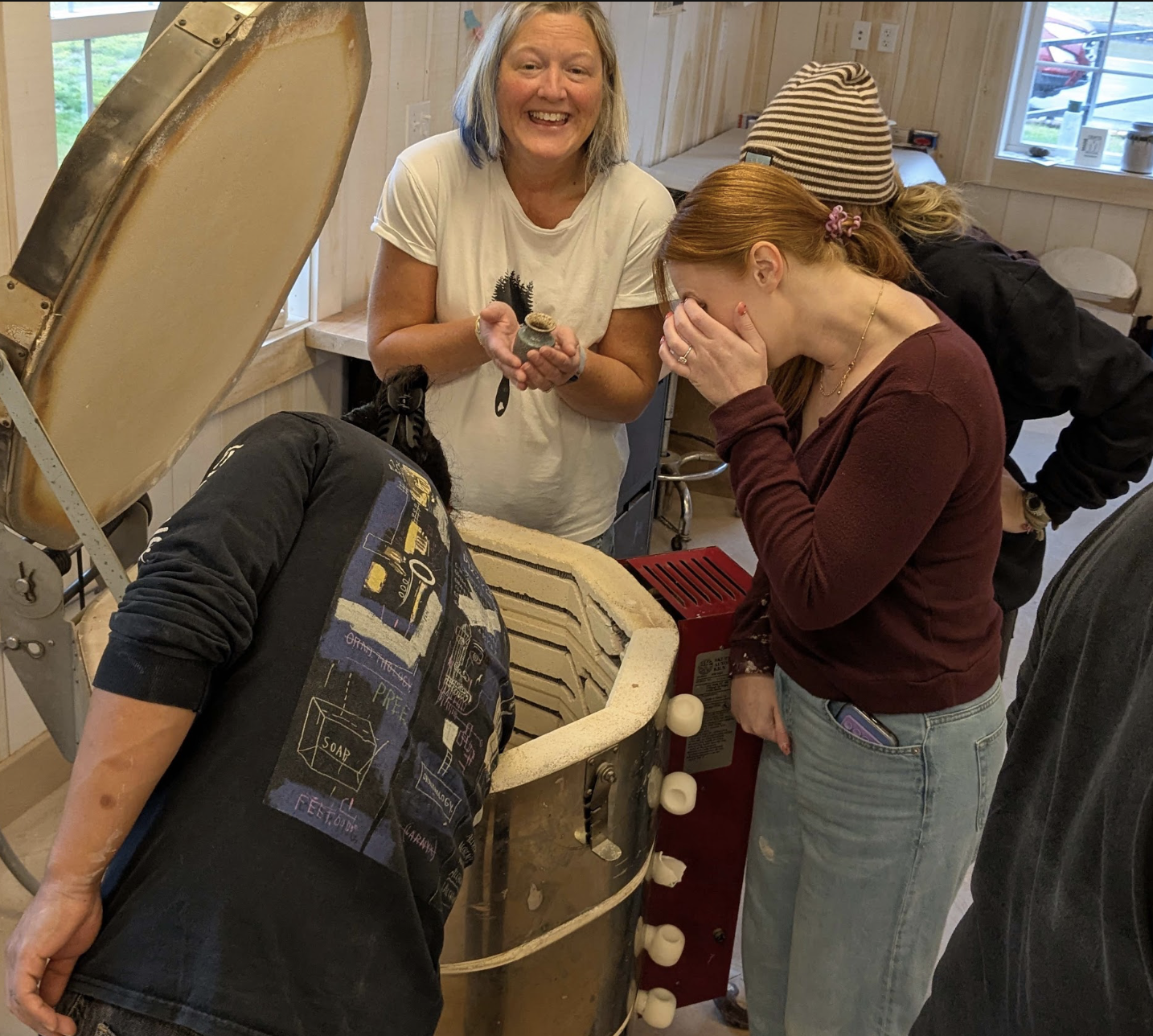
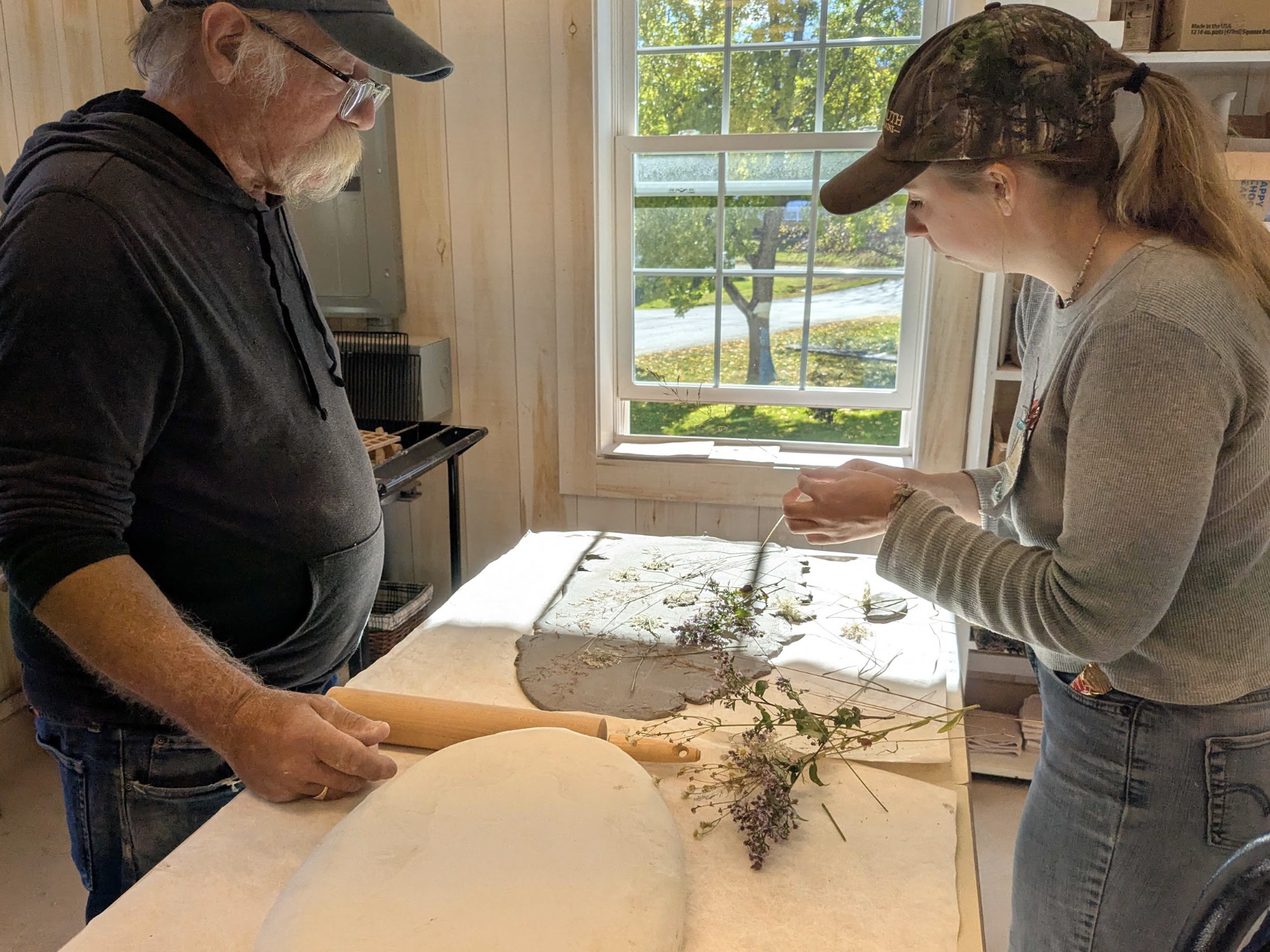
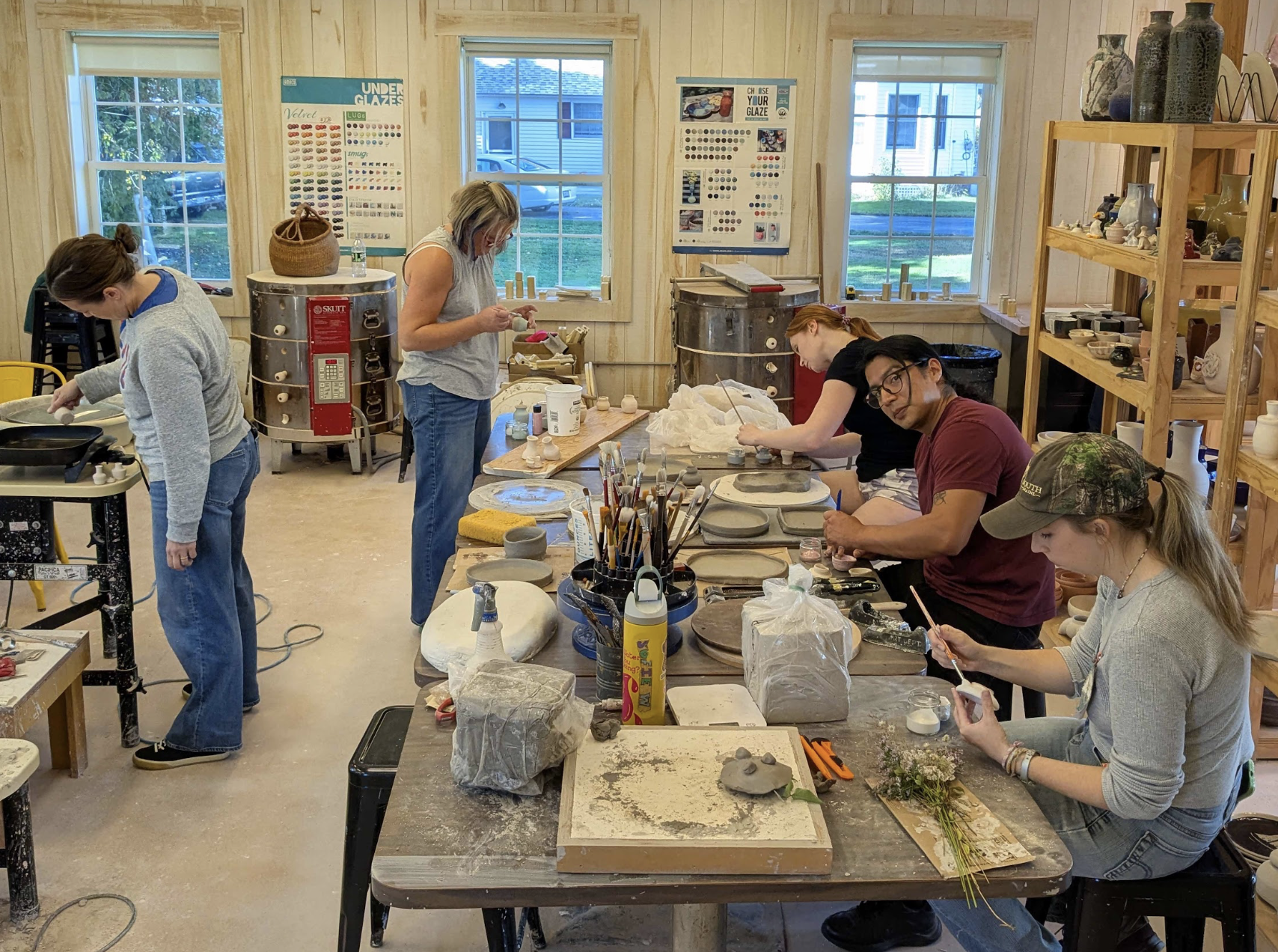
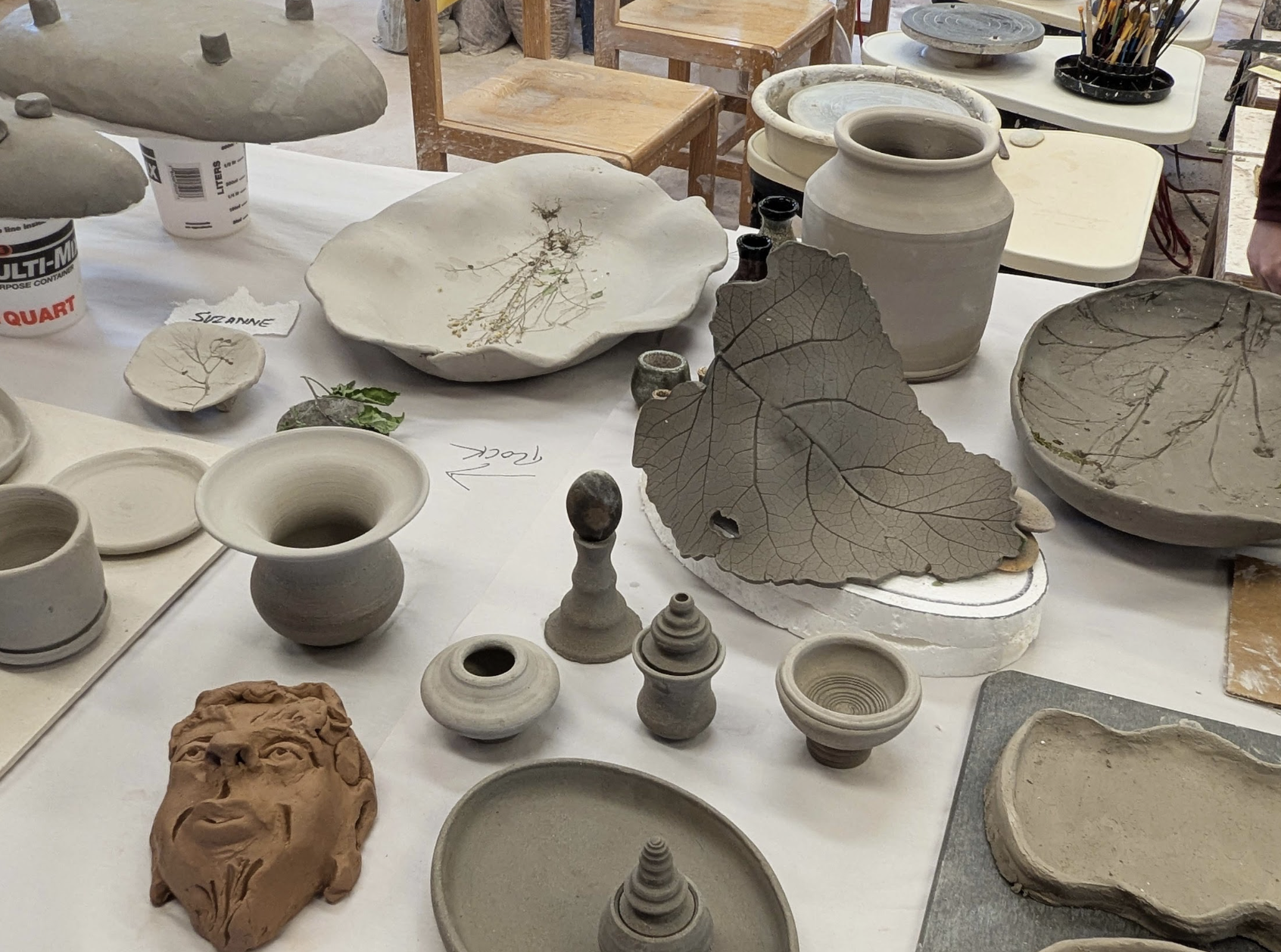
Jemma was incredibly knowledgeable and experimented with her own projects along with the participants. It was often a flurry of activity that continued late into the night. At the end of the three days, there was a vast collection of containers and platters in various stages, from leather-hard platters to bisque-fired baby pots. The workshop was enjoyed by all, and in the end everyone left with reusable molds, pots to be fired, and plans of returning to this wonderful location in the near future.
CONNECTING TO NATURE THROUGH ACCUMULATION with BRIAN SMITH (HE/HIM)
— Haystack
By Carmela Patriotti
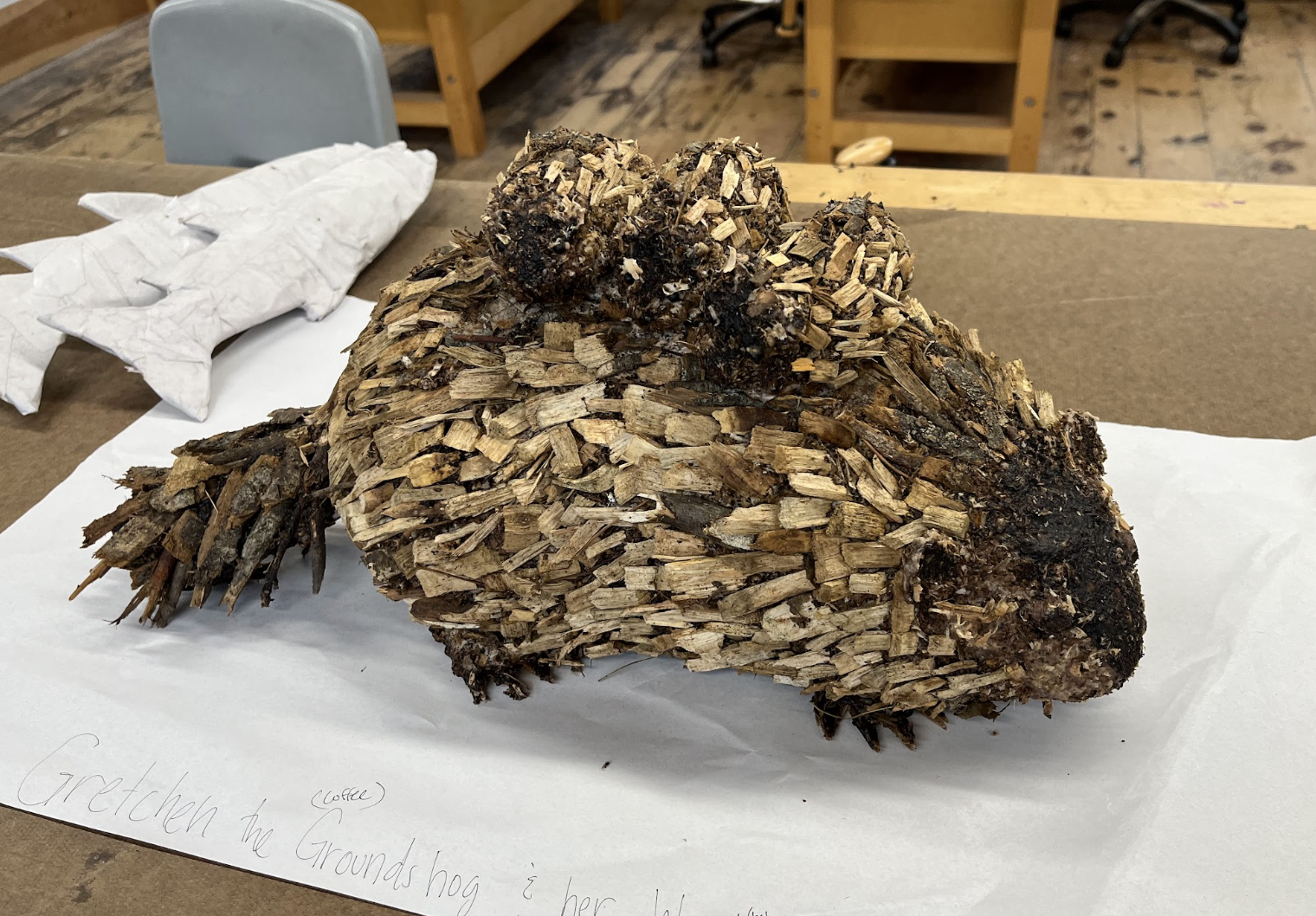
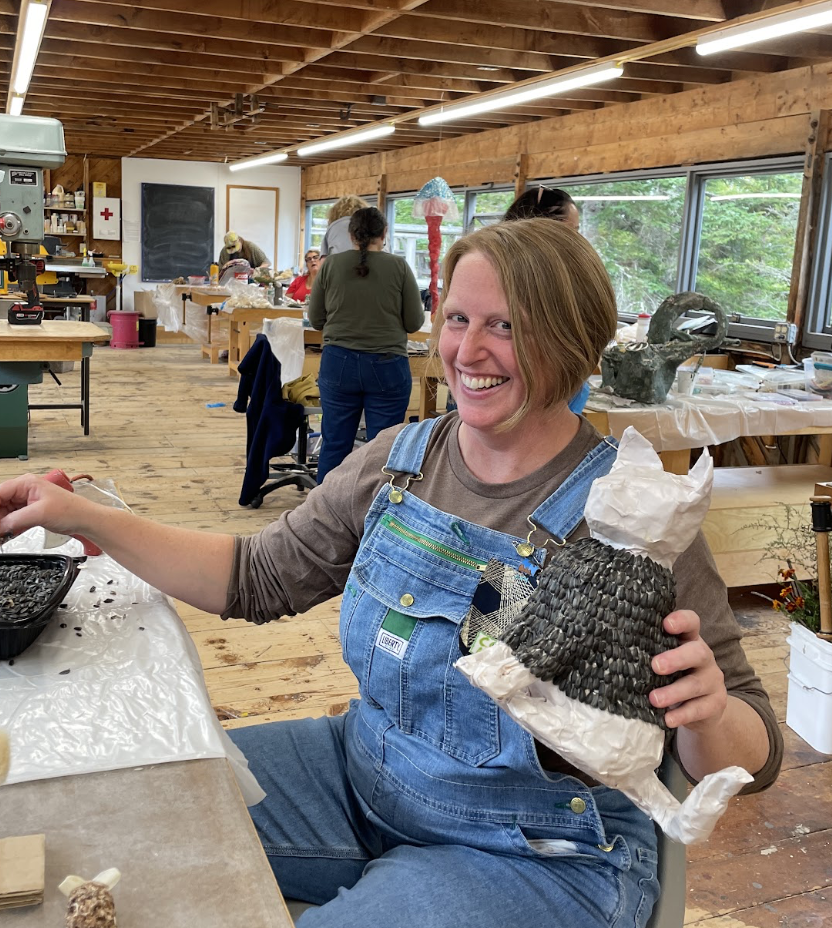
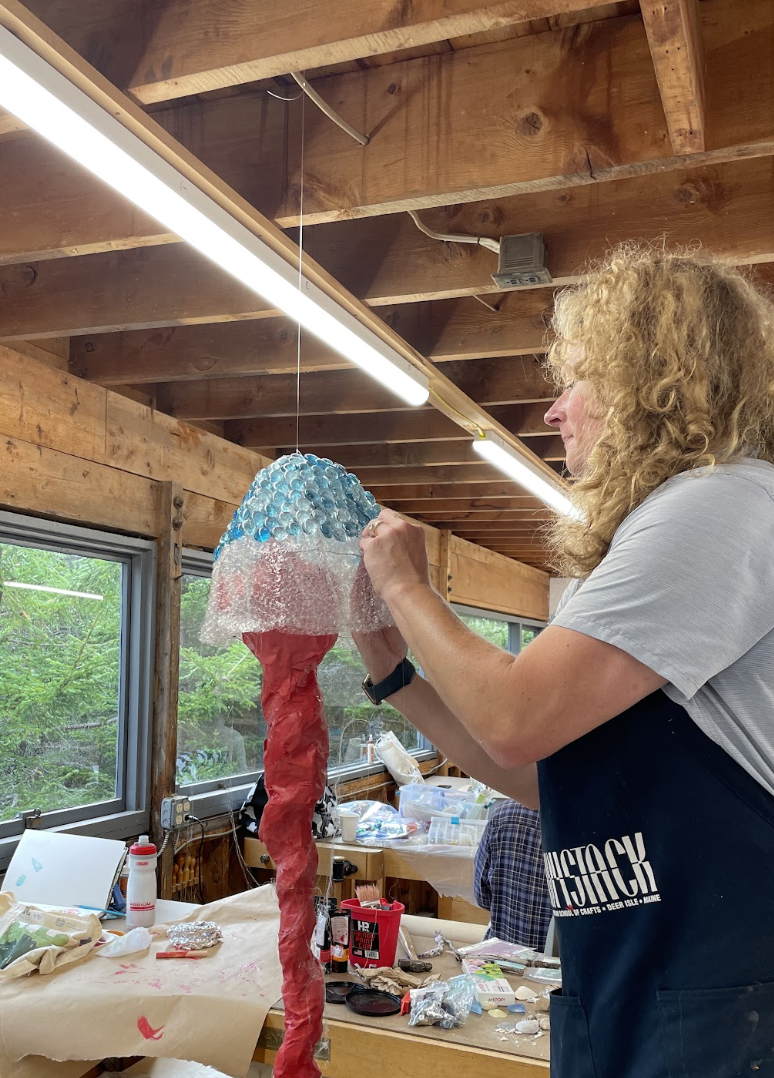
From the first meeting with Brian, we knew that we were going to be led down a road of learning, discovery and design! He enriched our minds with positive enthusiasm that was intoxicating! Brain gave us multiple methods and demonstrated different options. He was easily supportive and available with knowledge, hands on! He was funny and I do hope he returns to Haystack!
COLORFUL EARTH: HAND-BUILDING & TERRA SIGILLATA with GRACE HAGER (THEY/SHE) — haystack
By Kimberly Bahr
On the first day of the workshop, we focused on handbuilding forms from what inspires us. This led to multiple creations and creatures galore — everything from a loon to a can of sardines to sea creatures. Some just created forms with organic and geometric shapes. The group often wandered around and would be inspired by others. Everyone was very kind and invested in the class.
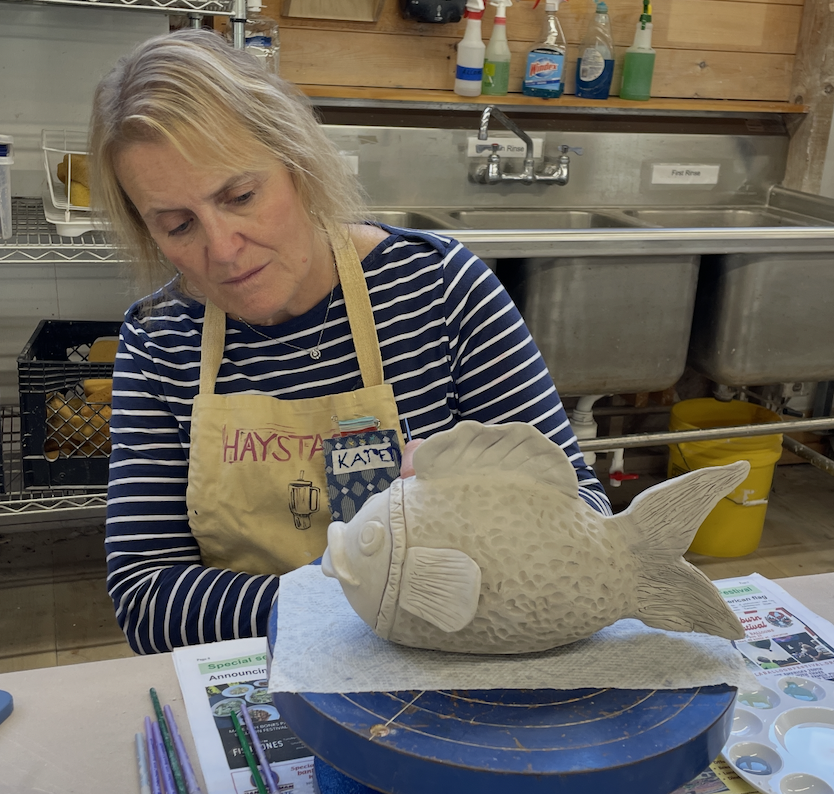
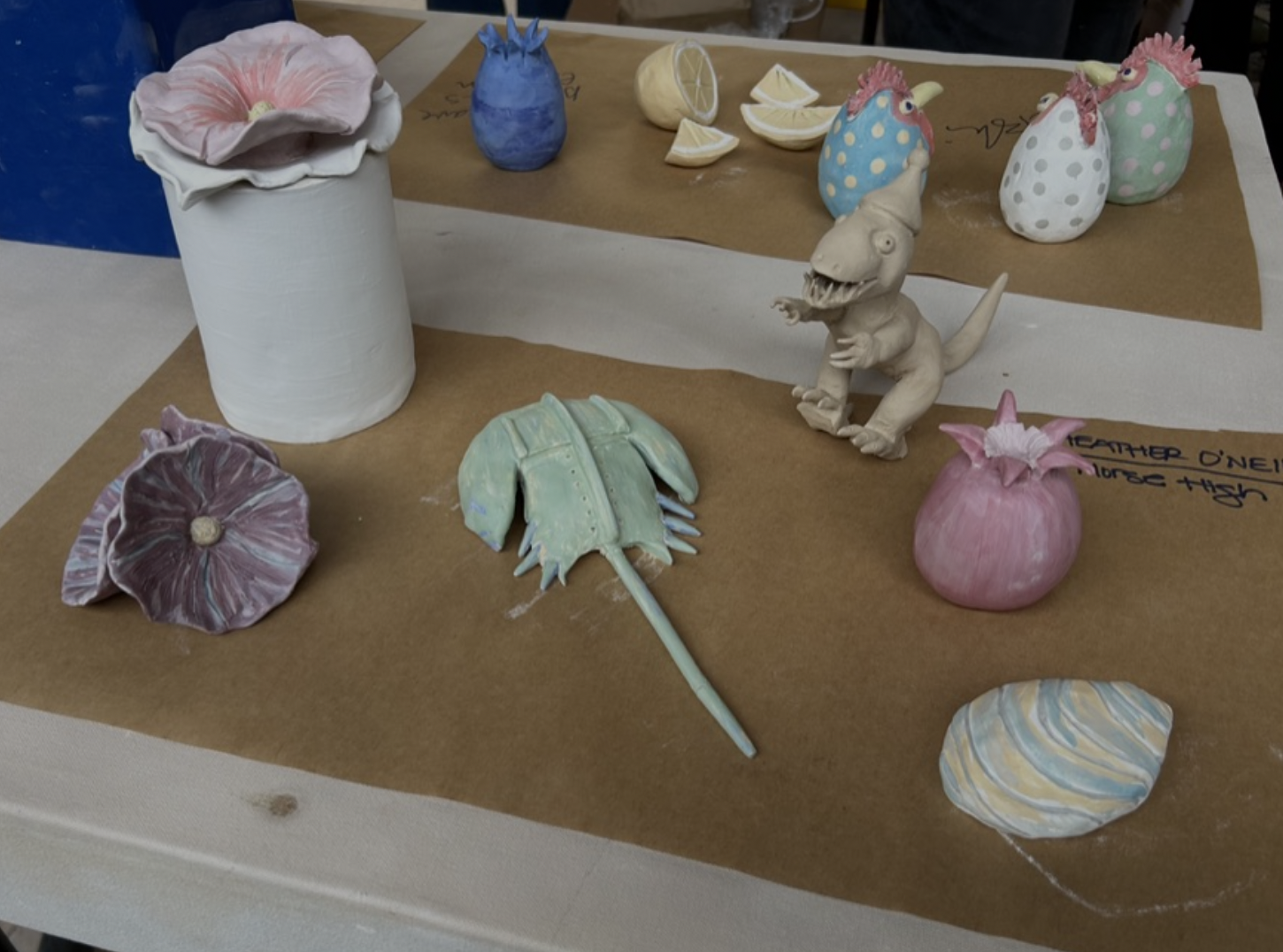
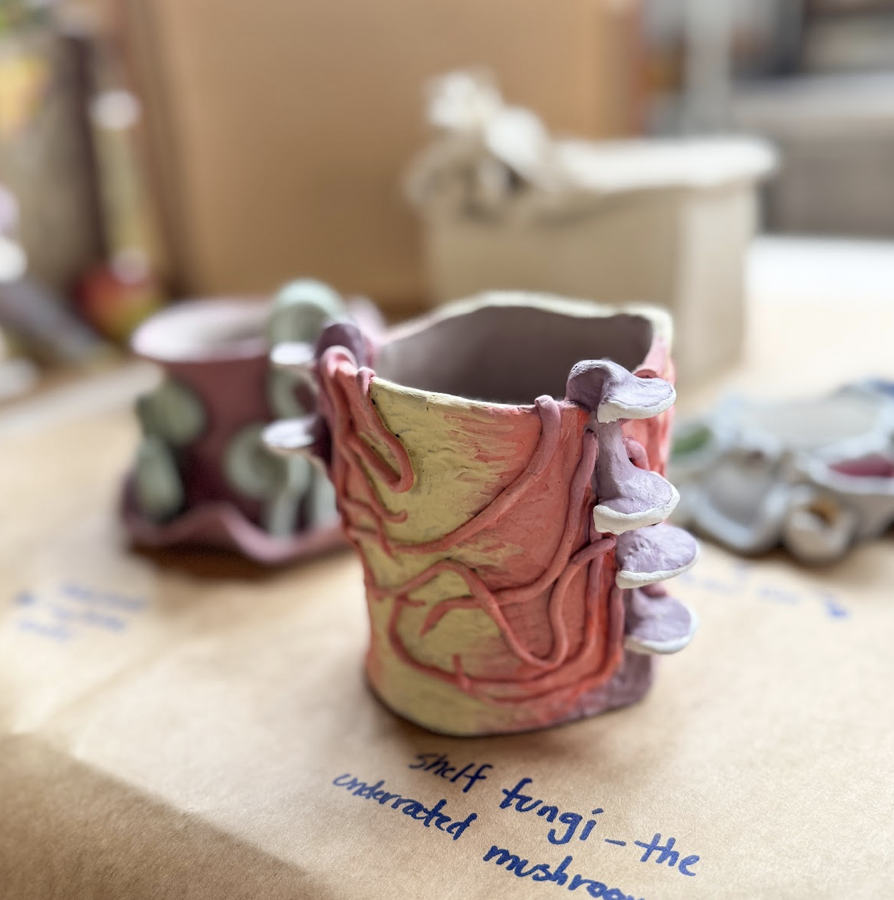
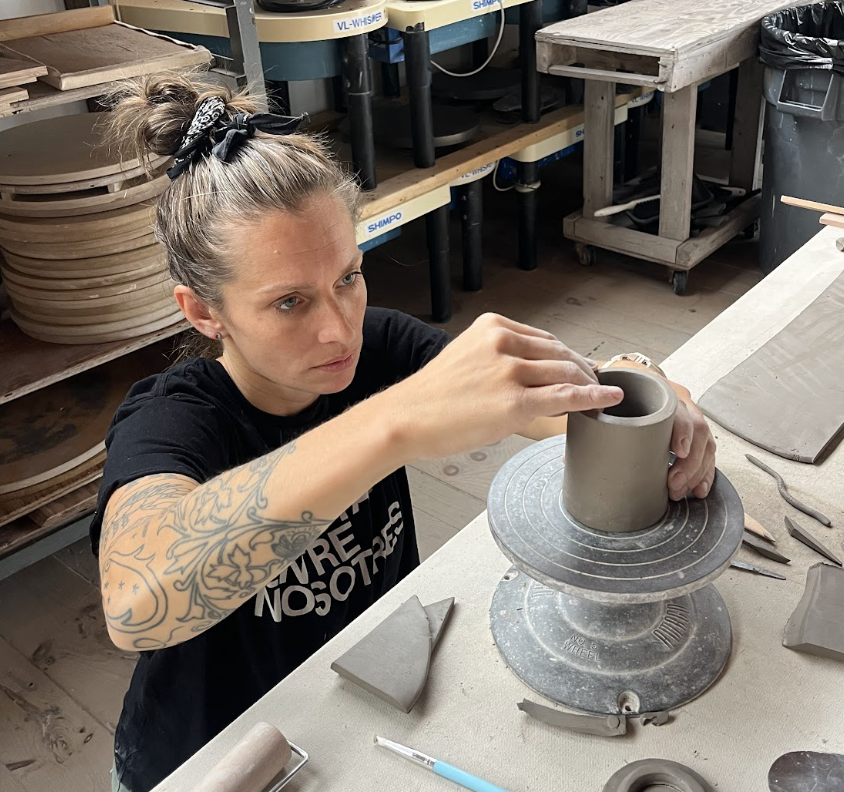
Then the next day the magic of terra-sigillata was explored. The instructor gave us a hand out and went over basic techniques of terra sigillata and how to create color with mason stains. Everyone began exploring the colors of the terra sigillata, which had been mixed for us. Walking around the last day revealed how artists can work in the same room with some material but develop
and create such diverse ideas.
Thank you, Haystack!
SCULPTURAL BOTANICAL PAPERMAKING with ASHLEY PAGE (SHE/HER) — Haystack
By Roz Gross
I can’t think of a better place to dip a wire sculpture into a milky vat of paper pulp and water than the back deck of the Graphics Studio at Haystack. Come to think of it, I’ve been thoroughly spoiled by Ashley Page’s workshop "Sculptural Botanical Papermaking" and now I only want to make paper outside on a beautiful fall day while surrounded by a dense canopy of pine trees, and a peek-a-boo view of the Atlantic Ocean! Sigh. Ashley encouraged us all to be inspired from and respond to this special place. Shells, trees, barnacles, seedpods, and more amorphic, branching forms grew out of our wild and wavy spools of wire that we somehow managed to tame into structures. Ashley warned us all about the safe use of eye protection while the sharp wire danced in the air; but did a group of seasoned art educators heed such practical advice? Let’s just say we all made it through the weekend unscathed!
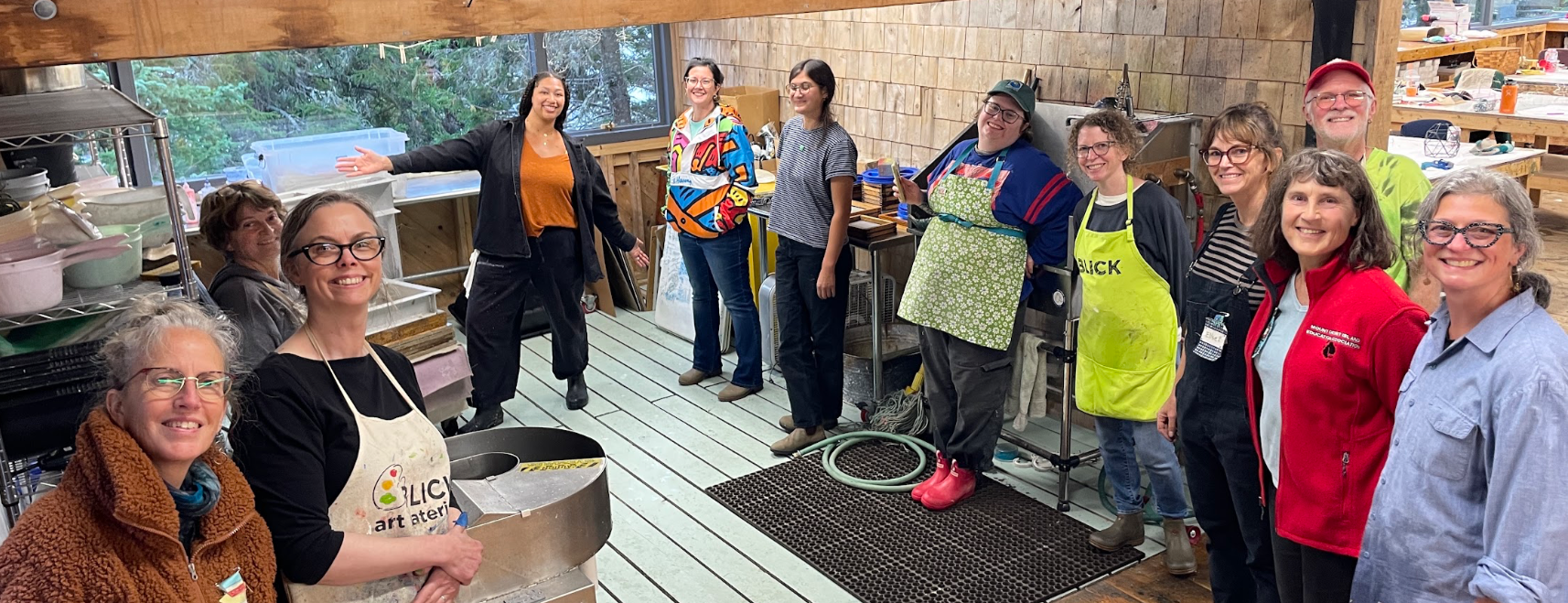
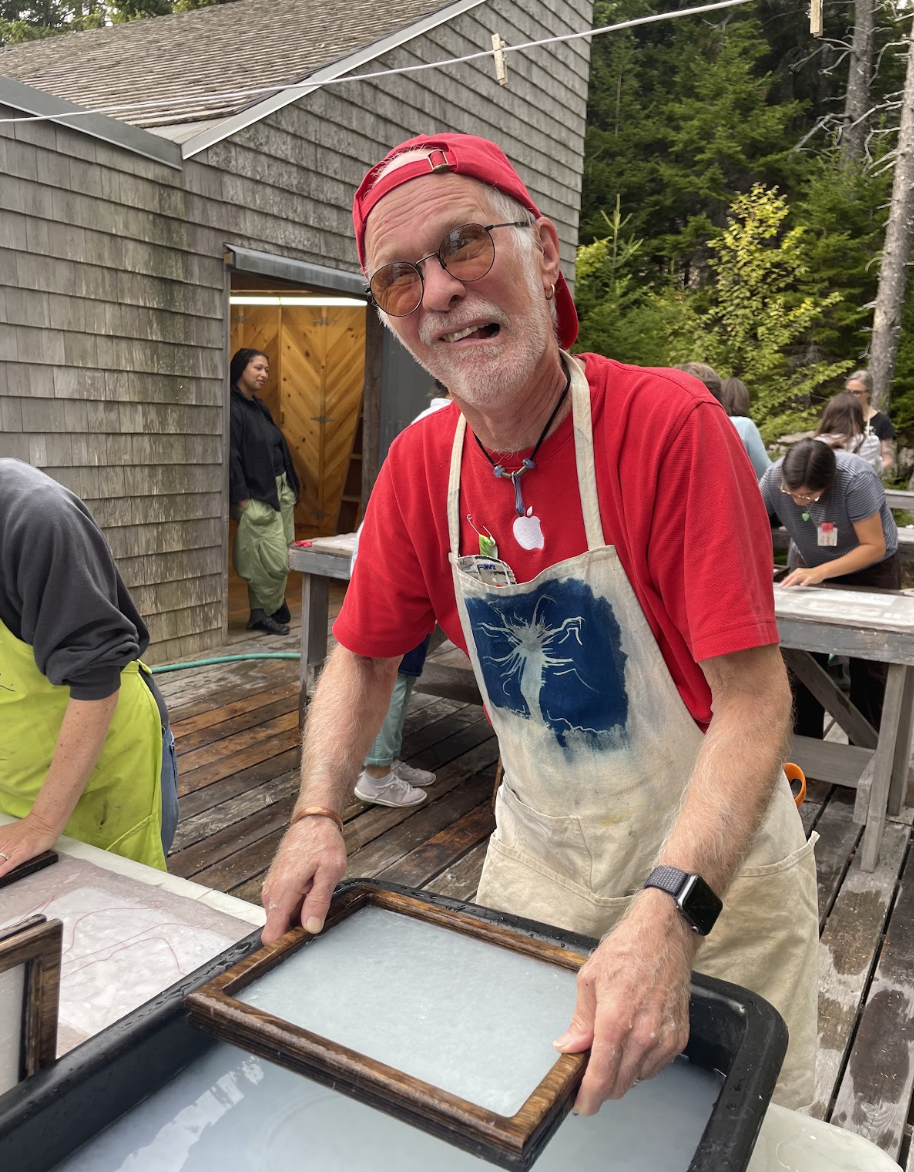
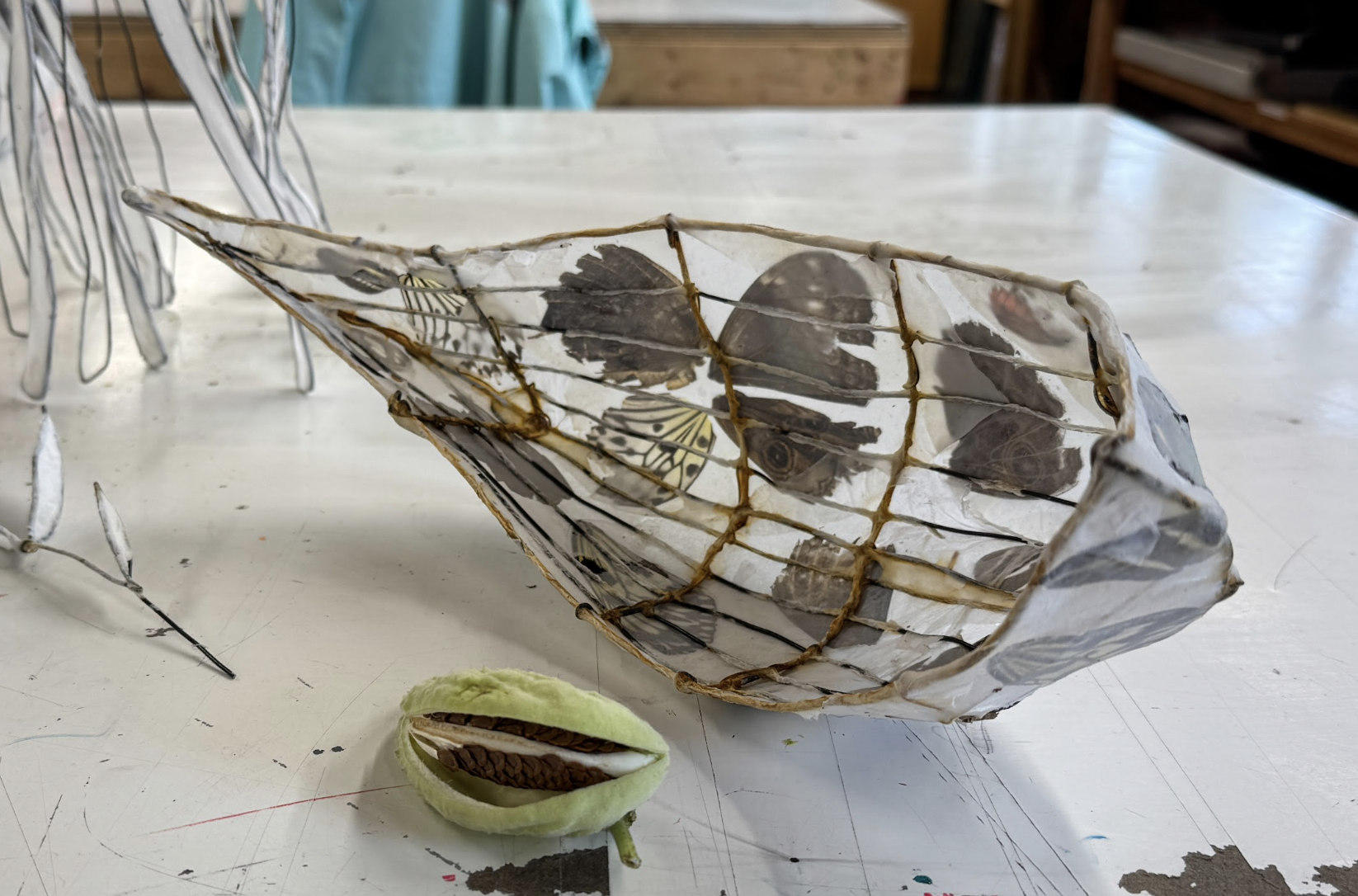
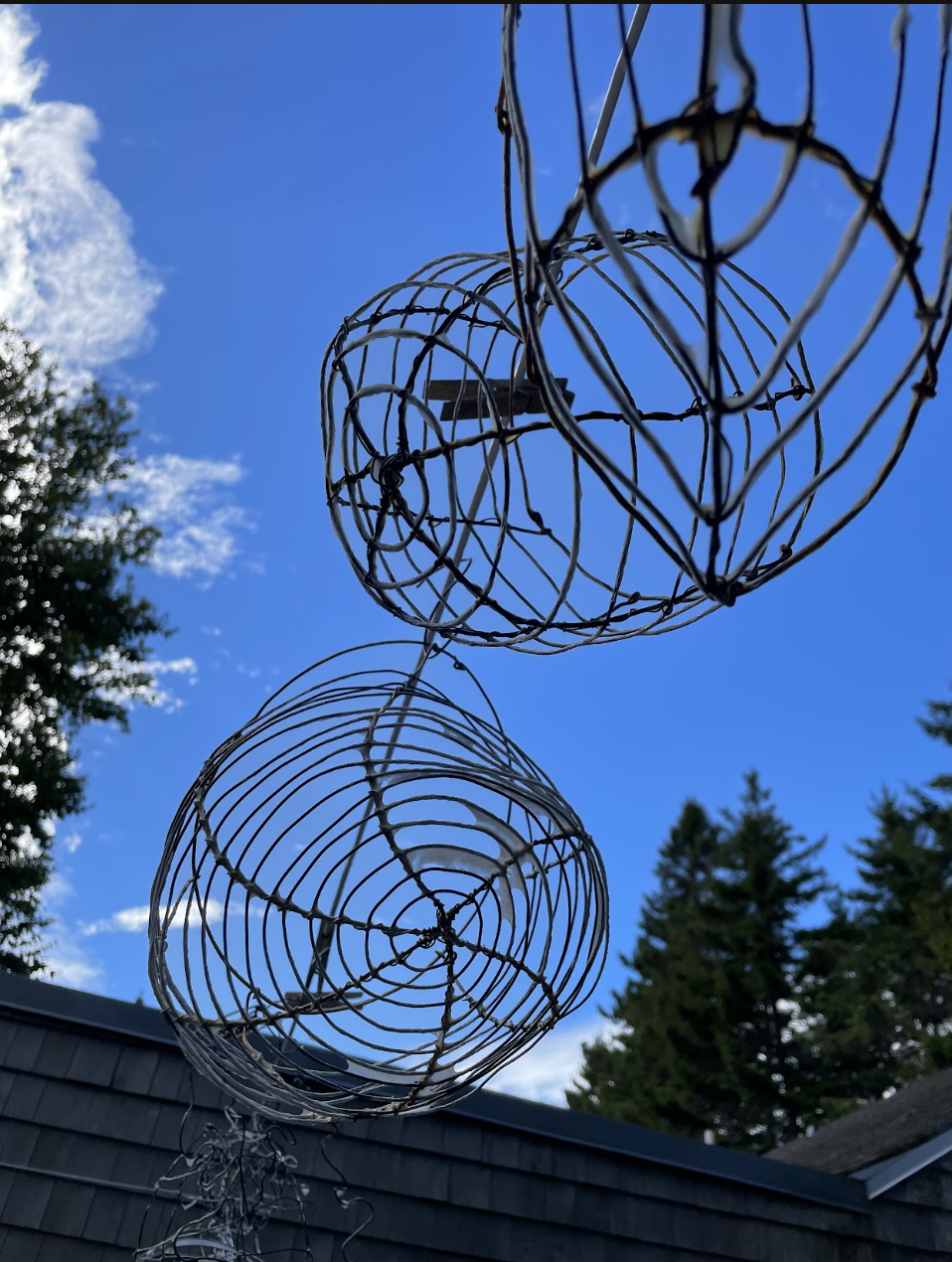
After stacking all of our handmade paper in an impressive hydraulic press (pun intended), Ashley guided us through the careful draping of paper over the open weave of our wire forms. Mere hours later, we delighted in the dry, taut ‘skin’ of paper adhered to our sculptures. So immensely satisfying!
Feeling grateful and full after this workshop. Thank you, Ashley, for sharing your creative process with us all!
Jewelry: MAINE FOUND OBJECT with OLIVIA BOI (SHE/HER) — haystack
By Brooke Holland
This workshop with Olivia Boi was an amazing experience. Olivia paced the class perfectly, balancing clear, live demonstrations with plenty of hands-on application time. She provided step-by-step handouts for every technique—including bezel and tab settings—making everything easy to follow.
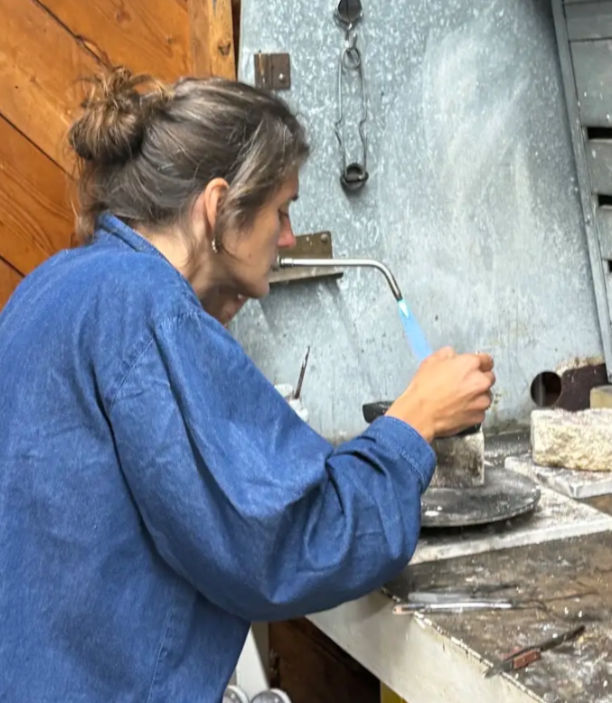
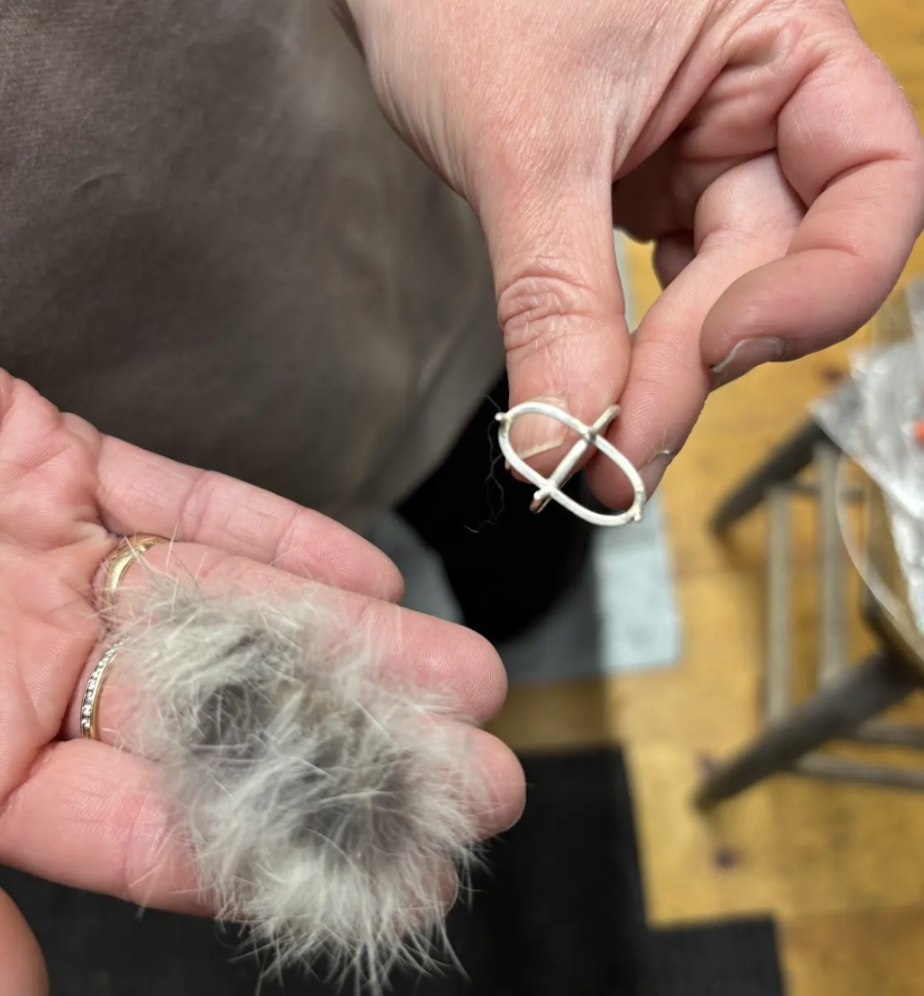
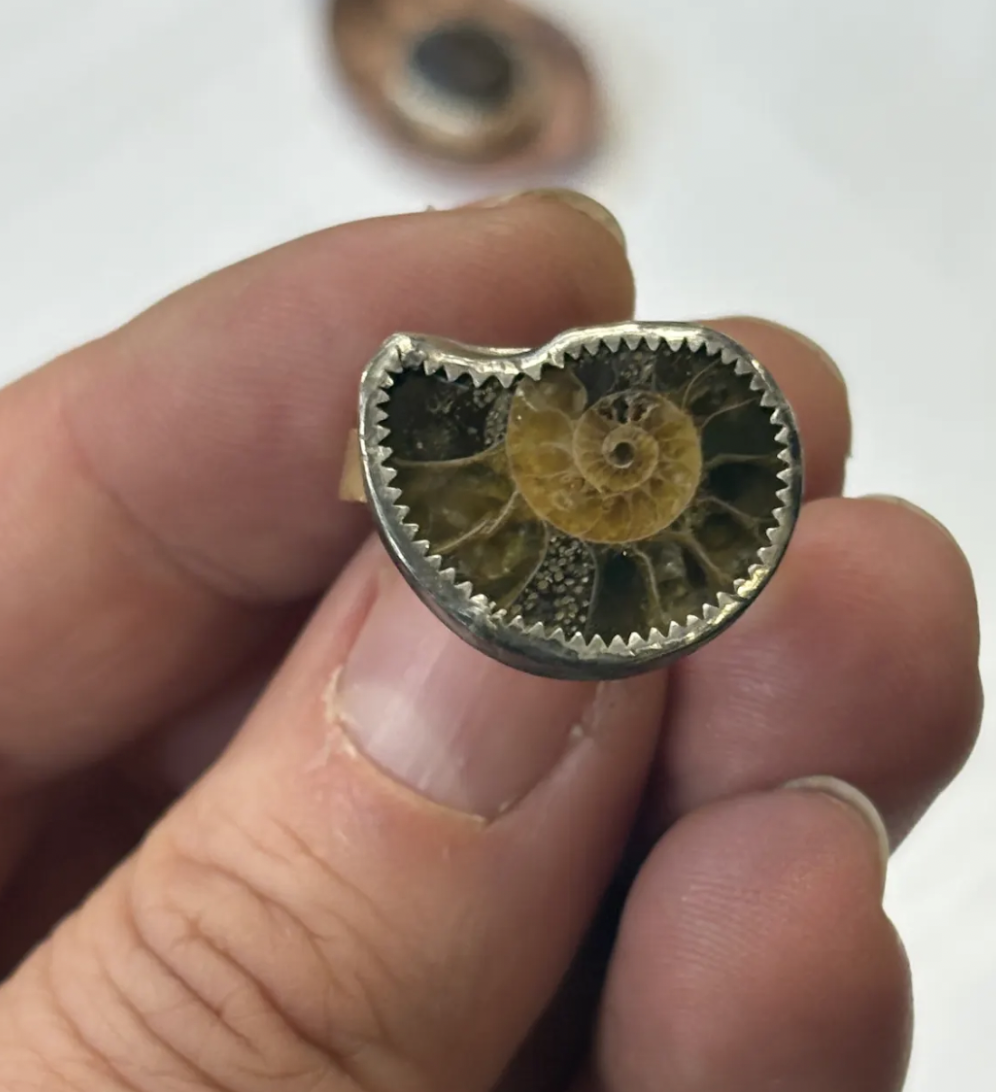
Attendees brought in their own source objects and made truly unique one-of-a-kind-pieces. Those found objects echoed our interests, histories, and people in our lives. And, as in many Haystack classes, we kept cranking out into the wee hours of the morning to eke the most out of our time.
Olivia created a warm, welcoming environment and was remarkably generous with her knowledge, supplies, found objects, and encouragement. She helped every student succeed.
Schedule — Haystack
Friday
9-11:30am: Registration + art vendor exhibits
11:30-11:45am: Conference orientation for facilitators & studio monitors
12-12:45pm: Lunch
12:45-1:45pm: Haystack orientation + MAEA Annual Meeting
2-5pm: Studio time
6-7pm: Dinner
7-8:30pm: Art educator opportunities + facilitator slides
8:30-?: Studio time
Saturday
8-9am: Breakfast
9-12pm: Studio time
12-12:45pm: Lunch
1-2pm: Optional Siesta/Swim Time
2-5pm: Studio time
6-7pm: Dinner
7-8pm: Addresses from Art Educator of the Year + facilitators
8-8:45pm: Silent auction
8:45: Studio time
Sunday
8-9am: Breakfast
9-10:30am: Critiques, closure, studio clean up
10:30-10:45am: Set up workshop exhibits
10:45-11:15am: Meander exhibits
11:30am: Lunch
12pm: Departure
schedule Monson
Friday
10:00-10:30: Arrival & Welcome by Monson folks
10:30: Workshop Introductions in studios
12:00: Lunch
1:00-1:45: MAEA Annual Meeting (via Zoom technology allowing, Tenney House)
1:45-5:45: Studio time
6:00: Dinner
7:00: Art Educator Opportunities
7:30-?: Studio time
Saturday
8:00: Breakfast
9:00-11:45: Studio time
12:00: Lunch
1:00-5:45: Studio time
6:00: Dinner
7:00-7:20: Art Educator of the Year Address
7:30- ?: Studio time
Sunday
8:00: Breakfast
9:00-12:00: Studio Time
12:00: Lunch
1:00-3:00: Studio Wrap-up, cleaning, sharing of work
By 5:00: Departure